FEMI OWOEYE
Euro NCAP is sounding the alarm over a potentially deadly weakness in Europe’s truck and trailer safety systems, urging manufacturers to voluntarily upgrade rear underrun protection before regulators impose new rules.
The European vehicle safety organisation says stronger rear guards could prevent hundreds of deaths annually in rear-end crashes involving heavy trailers.
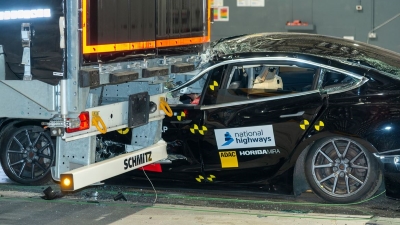
The warning follows Euro NCAP’s recent crash-testing programme, which exposed serious shortcomings in rear underrun protection fitted to trucks and trailers across Europe. The findings are expected to be presented to global vehicle regulators at the 132nd session of the United Nations Economic Commission for Europe (UNECE) Working Party on General Safety Provisions in Geneva from September 28.
When Cars Get Trapped Under Trucks
Rear underrun crashes occur when a passenger car slams into the rear of a heavy trailer and slides underneath it. Instead of allowing the car’s crumple zones and safety restraints to absorb the impact, the trailer structure can penetrate deep into the passenger compartment, creating potentially catastrophic consequences.
Euro NCAP estimates that such crashes contribute to around 400 fatalities across Europe every year.
Its testing found that European trailer rear guards complying with the current mandatory UN standard could fail when subjected to a 56 km/h impact. In some tests, the guards buckled, allowing passenger cars—even highly rated models—to slide underneath the trailer.
The organisation also identified weaknesses in crash-avoidance technology. While early-generation Advanced Driver Assistance Systems (ADAS) detected standard laboratory targets consistently, their performance dropped when confronted with real commercial trailers, including skeletal and curtainside designs.
Euro NCAP warned that the ageing passenger-car fleet means it could take more than 15 years before newer ADAS technology significantly reduces the risk.
US Safety Design Shows a Way Forward
Comparative testing produced a striking difference.
Trailers equipped with rear underrun barriers developed under the US Insurance Institute for Highway Safety’s voluntary TOUGHGUARD benchmark resisted the impact under identical conditions.
The stronger barriers helped prevent the passenger car from sliding underneath, allowing its crumple zones and airbags to work as designed.
Euro NCAP says this demonstrates that a practical solution already exists and does not necessarily have to wait for lengthy regulatory processes.
The organisation is therefore calling on European trailer manufacturers and heavy transport fleets to voluntarily adopt stronger rear underrun protection and develop retrofit solutions for vehicles already on the road.
Safety Before Regulation
Euro NCAP argues that legislation should establish a minimum safety standard rather than prevent manufacturers from going further.
Matthew Avery, Euro NCAP’s Director of Strategic Development, is expected to present the organisation’s findings to international regulators, highlighting the difference between Europe’s mandatory protection requirements and the stronger voluntary approach adopted in the United States.
With regulatory changes potentially taking years, Euro NCAP says manufacturers have an opportunity to act immediately.
For motorists sharing roads with heavy trucks and trailers, the message is stark: waiting for new regulations could mean waiting while preventable deaths continue.
©Copyright MOTORING WORLD INTERNATIONAL. All rights reserved. Materials, photographs, illustrations and other digital content on this website, may not be reproduced, published, broadcast, rewritten or redistributed in whole or in part without prior written permission from Motoring World International
Contact: editor@motoringworldng.com