FEMI OWOEYE
Nigeria’s automotive industry is moving to close a critical skills gap threatening the smooth transition to cleaner and emerging vehicle technologies, as the National Automotive Design and Development Council (NADDC) moves to standardise training for technicians working on Compressed Natural Gas (CNG) and Electric Vehicles (EVs).
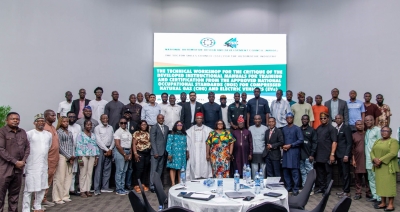
The Council recently convened automotive experts, industry practitioners, trainers, assessors, academics and other stakeholders in Lagos to scrutinise and validate new instructional manuals designed to train technicians in CNG vehicle conversion and EV maintenance.
The technical workshop, held on September 24, 2026, at Providence Hotel, Ikeja, Lagos, is expected to pave the way for a new generation of standardised training materials for Nigeria’s rapidly changing automotive sector.
The manuals were developed from the approved National Occupational Standards (NOS) for CNG vehicle conversion and EV maintenance. Their validation is aimed at ensuring that technicians trained under the programme receive practical, competency-based and industry-relevant instruction rather than fragmented training based on varying standards.
Speaking at the workshop, NADDC Director General/CEO, Otunba Oluwemimo Joseph Osanipin, stressed that the manuals must reflect the realities of modern automotive technology while meeting international standards.
Represented by the Director, Industrial Infrastructure Department, Mrs. Joke Onireti, Osanipin emphasised the need for technically accurate and practical training materials, particularly because CNG and EV technologies introduce new safety challenges.
He specifically highlighted occupational health and safety requirements involving high-pressure CNG systems, high-voltage EV systems, batteries, charging infrastructure, vehicle diagnostics and maintenance.
Onireti explained that stakeholders’ contributions would be incorporated into the manuals before they are forwarded to the National Board for Technical Education (NBTE) and the Industrial Training Fund (ITF) for the necessary approvals.
Once approved, the materials could become official training documents for Nigeria’s automotive industry.
President of the Automotive Sector Skills Council, Engineer Best Nnodim, described the validation exercise as a crucial stage in the development of a standardised national training framework.
According to him, NADDC had mandated the Sector Skills Council to develop instructional manuals that would serve as guides for trainers and trainees at designated training centres.
He explained that while the National Occupational Standards provide the foundation or curriculum for the training, the instructional manuals translate those standards into practical learning materials.
The validation exercise is being conducted in phases to capture perspectives from different parts of the country. The first phase brings together stakeholders from the South-East, South-South and South-West, while a subsequent session is scheduled for Kano to accommodate stakeholders from the northern regions.
Following the regional consultations, observations from the different zones will be harmonised by a smaller technical committee to produce a nationally acceptable document.
The immediate past President of the Sector Skills Council, Engineer Udeh Francis, said the exercise would help eliminate inconsistencies in the training of technicians entering the CNG conversion and EV maintenance fields.
He noted that the instructional materials are a direct follow-up to the National Occupational Standards already developed for the two emerging areas of automotive technology.
With Nigeria increasingly exploring CNG and electric mobility as alternatives within its evolving transportation landscape, the workshop signals a push to ensure that the technicians servicing these vehicles are not left behind by the technology.
Beyond producing manuals, the initiative could help establish a common benchmark for competence, safety and technical quality across automotive training centres.
The ultimate objective is clear: to equip Nigeria’s automotive workforce with the skills required to safely convert, diagnose, service and maintain the vehicles powering the next phase of the country’s mobility transition.
©Copyright MOTORING WORLD INTERNATIONAL. All rights reserved. Materials, photographs, illustrations and other digital content on this website, may not be reproduced, published, broadcast, rewritten or redistributed in whole or in part without prior written permission from Motoring World International
Contact: editor@motoringworldng.com