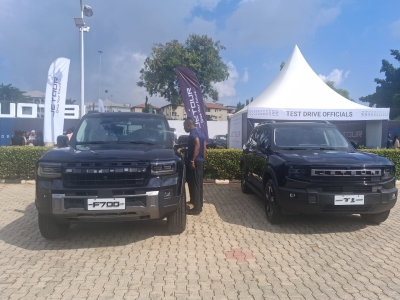
Nigeria’s automotive industrialization dream is facing a hard reality check. More than a decade after the Federal Government unveiled the National Automotive Industry Development Plan (NAIDP), many of the assembly plants once celebrated as symbols of a manufacturing revolution are either operating far below capacity or have quietly slipped into survival mode.
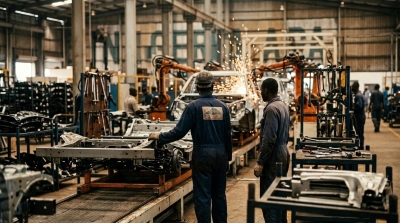
From the outside, the numbers appear impressive. Nigeria currently boasts over 70 licensed vehicle assembly plants with a combined installed capacity running into hundreds of thousands of units annually. But behind the glossy launch ceremonies, production announcements and political speeches lies a troubling question: how many of these plants are truly manufacturing vehicles in Nigeria, and how many are merely assembling imported kits?
The answer, industry insiders admit, is uncomfortable.
Following the launch of the NAIDP in 2013, global and indigenous investors rushed to establish assembly operations across the country. Yet, of the 56 indigenous assemblers originally licensed under the policy, only a handful remain active today. And even those are operating at extremely low capacity. Thousands of technicians employed during the sector’s early boom years have either been redeployed to after-sales departments or pushed out of work entirely.
Still standing are familiar names such as Innoson Vehicle Manufacturing, Stallion Group, Coscharis Motors, Mikano Motors, Dangote Peugeot Automobiles Nigeria, Kia Motors, Saglev Electromobility Limited, Jet Systems and Nord Automobiles. But surviving is not the same as thriving.
In Nnewi, Anambra State, Innoson remains one of the strongest symbols of indigenous ambition. The company assembles buses, SUVs and passenger cars while sourcing selected components such as plastics and batteries locally. Yet, like most operators in the sector, it still relies heavily on imported engines, transmissions and electronic systems.
The same story plays out across the industry. Stallion Group’s assembly operations in Lagos, covering brands like Nissan and Hyundai, have created jobs and reduced the prices of some vehicles. But many industry observers say the plants largely function as Semi Knocked Down (SKD) assembly operations, with very limited local component manufacturing.
Ironically, under the original NAIDP vision, Nigeria was expected to have transitioned from SKD to the more advanced Completely Knocked Down (CKD) manufacturing model years ago. That transition has simply not happened.
Even the much-publicised entry of the Dangote Group into vehicle assembly has followed a cautious path, relying substantially on imported kits for commercial vehicles.
Industry players blame a familiar list of obstacles: crippling power supply, poor logistics infrastructure, forex instability, high production costs and, perhaps most damaging, policy inconsistency.
For more than 10 years, the NAIDP itself has remained trapped in draft form without legislative backing, creating uncertainty for investors and manufacturers alike. Frequent changes in tariffs, import rules and foreign exchange policies have only worsened the situation.
The consequences are glaring.
Despite the existence of dozens of assembly plants, Nigerians continue to spend staggering amounts importing fully built vehicles. According to recent trade data, passenger vehicle imports hit over N4 trillion between 2023 and 2025, with import values rising sharply again in 2025 after a brief decline the previous year.
Industry experts insist the country must stop mistaking assembly for manufacturing.
“Assembly is not the same as manufacturing. The real question is how quickly we can move up the value chain,” an industry stakeholder noted.
Mobility expert, Mamudu Luqman, argued that long-term policy consistency is now critical to the survival of the sector. According to him, passing the NAIDP into law would provide the certainty investors desperately need while helping local assemblers plan beyond short-term economic shocks. He also stressed the urgent need for structured and affordable vehicle financing schemes to boost demand for locally assembled vehicles.
Auto dealer, Femi Olawale, believes Nigerian-made vehicles can still dominate the local market. But only if government support becomes more aggressive and sustained. He pointed to Innoson’s efforts as proof that local brands can succeed if consumers are properly convinced about quality, affordability and after-sales support.
There are also growing calls for government incentives to be tied directly to measurable increases in local content. Analysts say suppliers of components, spare parts and raw materials must be supported through industrial clusters, infrastructure development and targeted financing if Nigeria truly hopes to build a genuine automotive manufacturing ecosystem.
For now, however, many of Nigeria’s celebrated assembly plants remain caught somewhere between ambition and reality. Assembling imported kits while the country’s dream of full-scale automotive manufacturing continues to idle in the slow lane.
©Copyright MOTORING WORLD INTERNATIONAL. All rights reserved. Materials, photographs, illustrations and other digital content on this website, may not be reproduced, published, broadcast, rewritten or redistributed in whole or in part without prior written permission from Motoring World International
Contact: editor.motoringworldng@motoringworldng.com