…How Nigerian motorists can tell when keeping an old car becomes more expensive than replacing it
FEMI OWOEYE
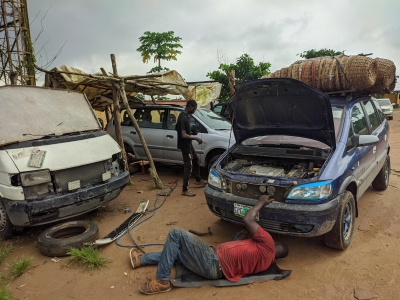
There comes a point in every motorist’s life when the workshop stops being a place for routine servicing and starts looking like a second home.
First, it is a worn-out suspension component. Then a faulty sensor. Next comes an overheating problem, transmission trouble or an expensive electrical fault. Before long, the mechanic calls with another frightening quotation.
That is when the question inevitably comes: Is it still worth repairing this car?
For Nigerian motorists, this is becoming an increasingly important question. The cost of spare parts, labour, tyres, batteries, fuel and routine maintenance can make an ageing vehicle surprisingly expensive to keep on the road.
But age alone should not determine whether a car should be replaced. A well-maintained 10-year-old vehicle may be far cheaper to operate than a poorly maintained five-year-old car.
The real issue is simple: What is the car costing you every month?
Add Up The Real Cost
Many motorists make the mistake of comparing one repair bill with the monthly instalment on another car. That is not a fair comparison.
Start with the last 12 months.
Add up servicing, repairs, tyres, batteries, brake components, suspension work, insurance, registration, fuel and any other significant expenses. Then divide the total by 12.
The result gives you a much clearer picture of what the vehicle is actually costing you every month.
Do not forget the hidden cost of breakdowns.
If your car frequently spends days in a workshop, you may also be paying for taxis, ride-hailing services or alternative transport. For commercial drivers and business owners, the cost can be even greater because every day off the road can mean lost income.
Watch The Repeat Failures
One of the biggest warning signs is repeated failure of the same component or system.
If the suspension keeps giving trouble, the cooling system repeatedly overheats, the transmission requires constant attention or electrical faults have become a regular occurrence, the problem may no longer be an isolated repair.
Also consider the availability and cost of spare parts.
Some older or less common vehicles have parts that are difficult to find in Nigeria. Even when available, imported components can be expensive and may take weeks to arrive.
That downtime has a cost.
Four Signs Your Car May Be Finished
Your vehicle may be approaching the point where replacement makes more financial sense if:
- Repair bills are becoming regular and consume a large portion of the car’s value.
- The same faults keep returning despite repeated repairs.
- Major safety components such as tyres, brakes, steering or suspension require expensive replacement.
- Fuel consumption has deteriorated significantly, despite proper servicing.
- The car spends more time in the workshop than on the road.
- A major component, such as the engine or transmission, requires replacement.
- Its market value has fallen so low that another major repair would represent a substantial percentage of its value.
But Don’t Rush to Buy Another Car
A large repair bill does not automatically mean you should sell.
Replacing a vehicle also comes with substantial costs: purchase price, financing, insurance, registration, maintenance, tyres and fuel.
A newer car may offer better fuel economy, improved safety and lower repair risk, but a long finance tenure can leave you paying for the vehicle for years.
Before making the switch, determine exactly what you can comfortably afford.
If your existing vehicle is still mechanically sound and the repair is a one-off, repairing it may be the smarter financial decision.
But if major repairs are becoming a recurring expense, the economics can quickly change.
The Bottom Line
There is no magic age at which a car must be replaced.
The better question is: How much is this car costing me to keep?
If the answer is becoming uncomfortably close to the cost of owning a reliable replacement, it may be time to let the old car go.
But make the decision with figures. Not emotion.
A familiar car may be difficult to part with, especially after years of ownership. However, loyalty to a vehicle should not turn into an endless cycle of repair, breakdown, repair again.
Sometimes the cheapest car to own is the one you already have.
And sometimes, the cheapest car is the one you finally decide to replace.
©Copyright MOTORING WORLD INTERNATIONAL. All rights reserved. Materials, photographs, illustrations and other digital content on this website, may not be reproduced, published, broadcast, rewritten or redistributed in whole or in part without prior written permission from Motoring World International
Contact: editor@motoringworldng.com