FEMI OWOEYE
Nigeria’s automotive industry is facing a major policy shift as the Federal Government moves to tie government patronage to compliance with automotive regulations, with non-compliant companies risking exclusion from public procurement opportunities.
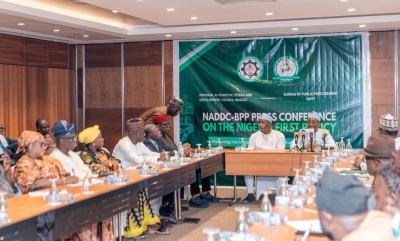
The National Automotive Design and Development Council (NADDC) and the Bureau of Public Procurement (BPP) disclosed this on October 9, 2026, at a press conference held at the Transcorp Hilton Hotel, Abuja, where they outlined plans to deepen implementation of the Nigeria First Policy.
The initiative aims to boost local vehicle production, expand the automotive components industry, create jobs and increase government patronage of Made-in-Nigeria vehicles and automotive products.
NADDC Director-General, Otunba Oluwemimo Joseph Osanipin, said the Council was committed to helping local vehicle assemblers transition from Semi-Knocked Down (SKD) assembly to Complete Knocked Down (CKD) production.
He explained that increased domestic production would create greater opportunities for Nigerian component manufacturers, deepen local content development and strengthen the country’s automotive value chain.
Osanipin stressed that companies that fail to comply with established government automotive regulations could be denied government patronage. He said the policy was intended to encourage manufacturers to expand production capacity, reinvest in their businesses and generate more employment opportunities.
According to him, sustained government purchases of locally manufactured vehicles and components would provide the market confidence needed to stimulate investment and accelerate industrial growth.
In his remarks, BPP Director-General, Dr. Adebowale Adedokun, disclosed that the Bureau was developing an institutional framework, standard policies and an official circular to guide implementation of the Nigeria First Policy across relevant government institutions, following President Bola Ahmed Tinubu’s directive.
Adedokun said the government had moved beyond policy declarations and commenced consultations with local automotive assemblers to understand the challenges confronting domestic manufacturers, particularly the need for stronger demand for locally produced vehicles and components.
He noted that Nigerian companies already manufacture automotive components, including wipers and bolts, but require stronger market support and patronage to sustain and expand production.
The BPP chief said effective implementation of the policy would promote industrialisation, create jobs for skilled workers and technicians, strengthen local supply chains and provide greater opportunities for young Nigerians.
He added that increased domestic production would reduce dependence on imported automotive products while encouraging investment, technology transfer and skills development.
The policy could significantly reshape the automotive business landscape by encouraging manufacturers to deepen local production and positioning Made-in-Nigeria products to benefit from government procurement opportunities.
Both agencies reaffirmed their commitment to working with local manufacturers and other stakeholders to ensure that the policy delivers tangible benefits to the automotive industry and the wider economy.
They expressed confidence that successful implementation would position Nigeria as a competitive automotive manufacturing hub and a major supplier of vehicles, components and related products to the ECOWAS region and the wider African market.
©Copyright MOTORING WORLD INTERNATIONAL. All rights reserved. Materials, photographs, illustrations and other digital content on this website, may not be reproduced, published, broadcast, rewritten or redistributed in whole or in part without prior written permission from Motoring World International
Contact: editor@motoringworldng.com