The Lagos Chamber of Commerce and Industry (LCCI) has warned that Nigeria’s ambitious transition to Compressed Natural Gas (CNG) and Electric Vehicles (EVs) could fall short unless the Federal Government forges a stronger partnership with the private sector to remove regulatory bottlenecks and unlock critical investments.
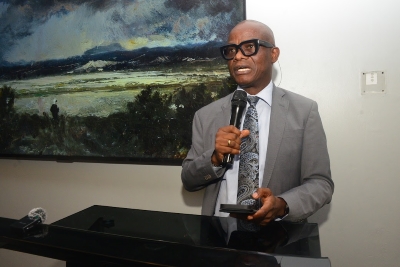
Chairman of the LCCI Auto and Allied Sector Group, Dr. Femi Eguaikhide, delivered the warning at the 3rd Nigeria Auto Industry Summit (NAISU) in Lagos, where he urged policymakers to deepen collaboration with industry players if the country’s clean mobility agenda is to achieve meaningful and lasting success.
Speaking at the summit organised by the Nigeria Auto Journalists Association (NAJA) under the theme, “Nigeria’s Clean Mobility Future: The EV and CNG Journey Under the Bola Tinubu Administration,” Eguaikhide said policy consistency, investor confidence and sustained stakeholder engagement would determine whether Nigeria becomes a regional leader in clean transportation.
He acknowledged the Federal Government’s commitment through the Presidential Initiative on Compressed Natural Gas and Electric Vehicles (Pi-CNG & EV), but stressed that government alone cannot drive the transformation without stronger cooperation with manufacturers, assemblers, financiers, technology providers and other private sector stakeholders.
According to him, the automotive industry remains a major catalyst for industrialisation, employment generation and economic growth, making it imperative for government agencies to eliminate regulatory barriers and create a more business-friendly investment climate.
Eguaikhide said policy implementation must be backed by continuous engagement capable of addressing challenges relating to vehicle conversion, local manufacturing, financing, infrastructure development and investment.
He warned that although Nigeria possesses enormous potential to build a globally competitive clean mobility ecosystem, fragmented policies and institutional bottlenecks could undermine progress if urgent reforms are not implemented.
He therefore called on government institutions to work more closely with the organised private sector in developing practical solutions that would accelerate the rollout of CNG refuelling stations, EV charging infrastructure and local vehicle production.
In his welcome address, NAJA Chairman Theodore Opara described the summit as an important platform for shaping the future of Nigeria’s automotive industry.
He said the Tinubu administration’s reforms have created fresh momentum for CNG adoption, electric vehicles and local automotive manufacturing, adding that stronger collaboration among government, industry and the media would be essential to sustain the gains.
The summit ended with stakeholders expressing confidence that Nigeria can emerge as a regional clean mobility hub if government, regulators and the private sector sustain collaboration on infrastructure development, investment, policy implementation and standards enforcement.
©Copyright MOTORING WORLD INTERNATIONAL. All rights reserved. Materials, photographs, illustrations and other digital content on this website, may not be reproduced, published, broadcast, rewritten or redistributed in whole or in part without prior written permission from Motoring World International
Contact: editor@motoringworldng.com