ANNIE ALLEN (UK Bureau Chief)
Soaring fuel prices, government incentives and cheaper electric models are sending European EV sales surging, with electric cars increasingly moving from niche choice to mainstream transport.
Electric vehicle sales are accelerating across Europe as motorists battered by high fuel costs turn increasingly to battery-powered cars, helped by subsidies and a growing supply of more affordable models.
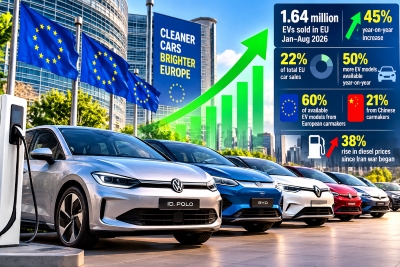
The surge has gathered pace since the Iran war began in February, driving oil prices higher and increasing pressure on household budgets. Industry data supplied to Reuters shows EV registrations rose 13% year-on-year in July across 16 European markets representing more than 90% of new-car sales in the EU and European Free Trade Association.
EVs accounted for 25.7% of all new-car sales in those markets.
The growth is even more striking over the first half of the year. EV sales in the European Union jumped 40.5% from the same period in 2025 to more than 1.2 million vehicles, giving electric cars a 20.7% share of total sales.
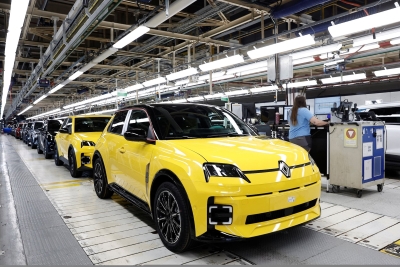
Renault is among the manufacturers riding the wave. In Britain, electric vehicles accounted for more than half of the company’s orders in July, compared with just 10% two years ago.
The Renault 5, a modern electric revival of the iconic 1972 model, became Britain’s best-selling EV in July. Renault is also preparing to launch the electric Twingo later this year at less than £20,000 before any applicable government incentive.
For consumers, the economics are becoming increasingly compelling.
Charlotte Merrell, a 32-year-old British EV buyer, said charging her Renault Megane at home costs just over £1, compared with about £60 to fuel her previous combustion-engine car.
“There’s no chance of me going back,” she said.
The shift is also evident in online vehicle markets. OLX reported a sharp increase in enquiries for EVs since the Iran war began, including an 84% jump in France, 59% in Romania, 30% in Portugal and 19% in Poland.
A Carwow survey of 1,000 German users found that 62% regarded switching to an EV as the best long-term response to persistently high fuel prices.
France has emerged as one of Europe’s strongest EV markets. Electric cars represented 29% of new-car sales in the year to July, while July alone produced a record 35% share, up from 17% a year earlier. The increase was helped by the country’s subsidised “social leasing” programme targeting lower-income motorists.
But Europe’s electric revolution still faces a major roadblock: charging infrastructure.
Millions of Europeans living in apartments lack convenient access to home charging, while public charging networks remain insufficient in many areas.
The question now is whether the EV boom can survive if oil prices fall sharply. Industry observers warn that some consumers could delay switching if petrol and diesel become significantly cheaper.
Yet with automakers—including increasingly competitive Chinese brands—bringing cheaper EVs to market and governments offering incentives, Europe’s electric transition appears to be gathering momentum.
The biggest challenge may no longer be convincing motorists that EVs work, but ensuring there are enough affordable charging points to keep the revolution moving.
©Copyright MOTORING WORLD INTERNATIONAL. All rights reserved. Materials, photographs, illustrations and other digital content on this website, may not be reproduced, published, broadcast, rewritten or redistributed in whole or in part without prior written permission from Motoring World International
Contact: editor@motoringworldng.com