ANNIE ALLEN (UK Bureau Chief)
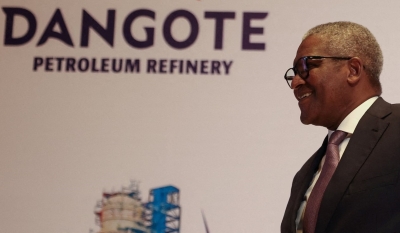
Aliko Dangote is taking his refinery revolution to Kenya, but his proposed $15–$16 billion mega-refinery is heading into a major challenge: where will it get enough crude?
Barely three years after battling soaring costs, difficult terrain and infrastructure constraints to launch Africa’s biggest refinery in Nigeria, Dangote is preparing to replicate the feat on Africa’s eastern coast.
But the proposed 700,000-barrel-per-day refinery at Lamu, Kenya, could face a problem Nigeria never had in quite the same form: Kenya currently has no commercial-scale crude production to feed the giant plant.
Dangote plans to break ground later this month and aims to complete the refinery by 2030. The project would become the group’s biggest refining investment outside Nigeria and is designed to supply Kenya and neighbouring East African markets, reducing the region’s dependence on imported petroleum products.
Yet the closer the project gets to reality, the bigger the questions become.
Kenyan officials have suggested that as much as 600,000 barrels of crude per day could potentially be sourced from East Africa, including Kenya, South Sudan and Uganda.
The problem is that none of these sources offers an easy solution.
Kenya has proven reserves but has struggled for years to begin commercial production. South Sudan’s oil exports have been disrupted by instability along its traditional export route through Sudan, while Uganda’s crude is already committed to the East African Crude Oil Pipeline running to Tanzania.
That could leave the Lamu refinery heavily dependent on seaborne crude imports from the international market, exposing the giant plant to global supply disruptions and geopolitical shocks.
And there is another headache: much of the infrastructure needed to support Lamu’s ambitions, including planned oil-storage facilities, has yet to be built.
Crude supply is not the only concern.
Dangote Group has indicated that the Kenyan project will be financed through a combination of internal cash flow, bonds and an IPO, potentially alongside equity participation by East African governments.
But the group is already embarking on another gigantic expansion: $14.3 billion to double the capacity of its Nigerian refinery to 1.4 million barrels per day by 2029.
Analysts therefore warn that competing demands for capital could make financing the Kenyan project considerably more difficult.
The stakes are enormous. If successfully executed, the Lamu refinery could transform East Africa’s fuel-supply landscape. Kenya currently spends billions of dollars annually importing petroleum products, making fuel one of its biggest import bills.
President William Ruto sees the refinery as a potential economic game-changer.
But analysts warn that the combination of massive capital requirements, uncertain crude logistics, incomplete infrastructure and environmental concerns creates substantial execution risks.
For Dangote, therefore, Lamu is more than another refinery.
It is a high-stakes test of whether the Nigerian refining miracle can be exported to a region that does not yet have the crude, and infrastructure, to easily sustain it.
©Copyright MOTORING WORLD INTERNATIONAL. All rights reserved. Materials, photographs, illustrations and other digital content on this website, may not be reproduced, published, broadcast, rewritten or redistributed in whole or in part without prior written permission from Motoring World International
Contact: editor@motoringworldng.com