Why a Nigeria-assembled vehicle may be your smartest investment; and what you must know before choosing between new, Tokunbo, Nigerian-used or dealer demo models.
MIRIAM LAWAL
Buying a vehicle is one of the biggest financial decisions most Nigerians will ever make. Yet, many buyers make the mistake of focusing almost entirely on the purchase price instead of the total cost of ownership – maintenance, fuel consumption, spare parts, warranty, insurance, depreciation and resale value.
The smartest vehicle is not necessarily the cheapest; it is the one that delivers the best value throughout its years of ownership.
A brand-new vehicle offers maximum peace of mind. It comes with a manufacturer’s warranty, zero mechanical wear, modern safety features and scheduled servicing through an authorised dealership. Although a new vehicle begins to depreciate once it leaves the showroom, owners often recover that initial loss through greater reliability, fewer unexpected repairs and lower maintenance costs.
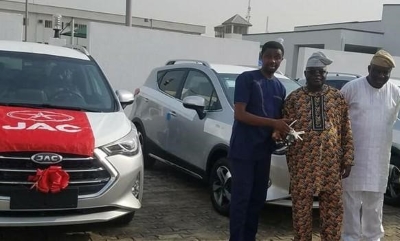
Today, however, buying a new vehicle no longer necessarily means importing one. Nigeria now has several reputable assembly plants producing passenger cars, SUVs, pick-ups, buses and trucks to manufacturers’ global standards. For many buyers, a Nigeria-assembled vehicle has become the most sensible choice.
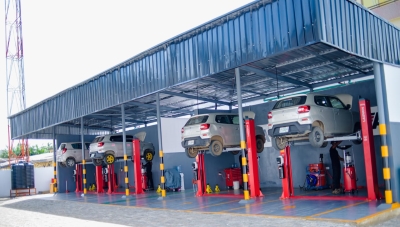
The reasons are practical rather than sentimental. Locally assembled vehicles purchased through authorised dealerships come with factory-backed warranties, genuine spare parts, trained technicians and dependable after-sales support. If a component develops a fault, replacement parts are far easier to obtain than for many imported used vehicles, whose owners often spend weeks searching the spare parts market or settle for inferior alternatives.
Patronising Nigeria-assembled vehicles also contributes to the growth of local manufacturing, creates jobs, develops technical skills and reduces pressure on the country’s foreign exchange. As government continues to promote local vehicle assembly through supportive policies, consumers are increasingly discovering that buying locally assembled vehicles is not merely patriotic—it also makes sound economic sense.
For buyers working with tighter budgets, Nigerian-used vehicles remain attractive because the first owner has already absorbed much of the depreciation. However, buyers should proceed carefully. Poor road conditions, flooding, inadequate maintenance and the widespread use of counterfeit spare parts mean that two vehicles of the same age may differ significantly in condition. A thorough inspection by a trusted mechanic before purchase is therefore essential.
Foreign-used vehicles, popularly known as Tokunbo, continue to dominate Nigeria’s used vehicle market because many arrive with relatively low mileage. However, buyers should never assume that every Tokunbo vehicle is accident-free or mechanically perfect. Some imported vehicles have previously suffered collision or flood damage before being repaired for export. Whenever possible, buyers should verify the Vehicle Identification Number (VIN), request the vehicle’s history and insist on an independent inspection before paying.
Another category that deserves more attention is the dealer demonstration vehicle. Demo vehicles are used by authorised dealerships for test drives, showroom display or executive movement. They are usually only a few months old, have relatively low mileage and are maintained strictly according to the manufacturer’s standards. Because they have already been registered, they are sold below the price of a brand-new vehicle while retaining the balance of the manufacturer’s warranty and service package. For buyers seeking a nearly new vehicle without paying full showroom price, a dealer demo can represent exceptional value.
Whichever category appeals to you, never buy based on appearance or price alone. Ask whether the vehicle still has a valid warranty, whether there is a remaining service plan, whether it has been involved in an accident, whether genuine spare parts are readily available and whether the dealer offers dependable after-sales support. A reputable dealer should answer these questions without hesitation.
Ultimately, every category has its place. A carefully maintained Nigerian-used vehicle can offer good value. A genuine Tokunbo vehicle may suit some buyers, while a dealer demo provides many of the benefits of a new vehicle at a lower cost. But for motorists seeking the best combination of reliability, warranty protection, readily available genuine parts, professional after-sales support and lower long-term ownership costs, a Nigeria-assembled vehicle purchased through an authorised dealership increasingly represents the smartest investment.
In today’s challenging economy, the wisest buying decision is not simply the one that costs less on the day of purchase. It is the one that will cost less to own, maintain and enjoy for many years to come.
©Copyright MOTORING WORLD INTERNATIONAL. All rights reserved. Materials, photographs, illustrations and other digital content on this website, may not be reproduced, published, broadcast, rewritten or redistributed in whole or in part without prior written permission from Motoring World International
Contact: editor@motoringworldng.com