Kickstarter with : FEMI OWOEYE
The Senate has done something many Nigerians never thought they would see—it has finally proposed penalties that may actually make reckless motorists think twice before breaking traffic laws.
For years, Nigeria’s traffic fines have been laughably low. A motorist could speed recklessly, jump traffic lights or even drive under the influence of alcohol and still get away with penalties that were hardly enough to fill the fuel tank of an average car.
Little wonder many offenders simply treated traffic fines as part of the cost of driving.
That era deserves to end.
If President Bola Tinubu signs the amended Federal Road Safety Corps (FRSC) Act into law, motorists who deliberately endanger lives will finally realise that traffic offences are not minor mistakes—they are actions capable of destroying families in seconds.
On this point, I stand firmly with the Senate.
But there is another side of this legislation that must not be ignored.
As government strengthens the law against motorists, it must also strengthen accountability among those enforcing it.
A law is only as good as those implementing it.
The overwhelming majority of FRSC officers are disciplined professionals who genuinely want safer roads. Unfortunately, like every institution, there are a few bad eggs whose actions tarnish the image of the entire Corps. Stories of alleged extortion, intimidation and questionable traffic stops have, over the years, fuelled public distrust in some enforcement operations.
That is why this amendment presents Nigeria with a golden opportunity to do what many advanced countries have already done.
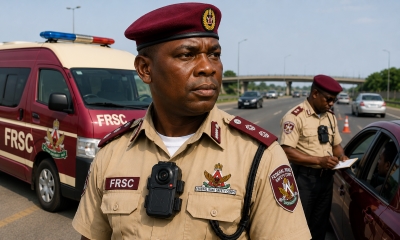
Every regular FRSC marshal on patrol should wear a body camera.
Not tomorrow. Not someday. Now.
Interestingly, this is not even a fresh proposal.
During the tenure of the immediate past Corps Marshal, Dr. Boboye Oyeyemi, the idea of introducing body cameras formed part of the Corps’ modernisation agenda. It was one of the most forward-looking initiatives ever conceived by the FRSC because it recognised a simple truth: technology protects both the law enforcer and the citizen.
Sadly, like many good ideas in Nigeria, it never gained the momentum it deserved.
Now is the time to revive it.
Think about what lies ahead if the amended law becomes operational.
A motorist could face fines of up to ₦100,000 for certain violations. In some instances, convictions may carry even stiffer consequences.
Can we honestly say such penalties should be imposed based solely on the word of an officer against that of a motorist?
Certainly not.
Every enforcement action should be backed by video evidence. Every traffic stop should be recorded. Every allegation should be verifiable. Every genuine officer should welcome that.
Body cameras are not weapons against FRSC personnel. They are shields for honest officers and protection for law-abiding motorists.
They discourage bribery. They discourage harassment. They reduce unnecessary arguments. They eliminate false accusations.They provide evidence that can stand in court.
Above all, they restore public confidence.
Indeed, countries that have embraced body cameras have reported significant reductions in complaints against law enforcement officers, while officers themselves increasingly acknowledge that the devices protect them from unfounded allegations.
Nigeria should not be different.
The Federal Government must therefore budget for body cameras, digital evidence management systems and the necessary training that will accompany their deployment.
The National Assembly should equally consider incorporating technology-driven accountability measures into the final implementation framework of the amended FRSC Act.
This is not merely about buying gadgets.
It is about modernising road traffic law enforcement.
It is about protecting innocent motorists.
It is about protecting professional marshals.
It is about ensuring that justice is seen to be done.
The Senate has rightly decided that reckless driving should become more expensive.
Excellent.
Now let Nigeria make abuse of enforcement powers much more difficult.

If motorists are expected to obey tougher laws, enforcement officers should equally operate under tougher scrutiny.
That is how responsible nations build public trust.
That is how safer roads are achieved.
And that is why I say this: No body camera, no traffic enforcement.
The day every FRSC marshal wears a body camera is the day Nigerians will know that road safety enforcement has truly entered the twenty-first century.
©Copyright MOTORING WORLD INTERNATIONAL. All rights reserved. Materials, photographs, illustrations and other digital content on this website, may not be reproduced, published, broadcast, rewritten or redistributed in whole or in part without prior written permission from Motoring World International
Contact: editor@motoringworldng.com