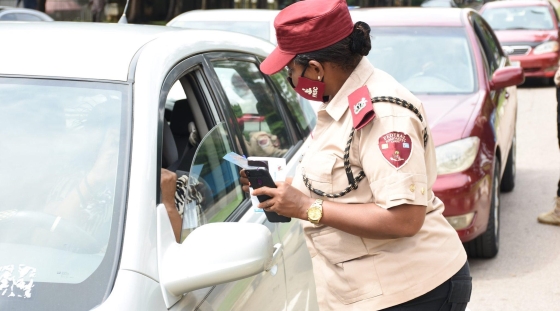
The disturbing incident involving a traffic offender who escalated a routine stop into an attempted abduction of a Federal Road Safety Corps (FRSC) patrol officer is not just shocking, it is symptomatic of a deeper, more dangerous culture of lawlessness festering on our roads.
What should have been a straightforward enforcement exercise, overloading, licence verification, compliance, quickly degenerated into bribery, resistance, and ultimately a brazen attack on an officer of the law. That this offender has been remanded is commendable. But justice in this singular case, while necessary, is not sufficient. It must trigger a broader national reckoning.
Across Nigeria, attacks on FRSC marshals are not isolated. From verbal abuse and attempted bribery to physical assaults and hit-and-run incidents, road safety officers increasingly find themselves exposed, not just to traffic hazards, but to outright hostility. This trend is unacceptable. It undermines authority, weakens enforcement, and ultimately endangers every road user.
Let us be clear: the FRSC is not an adversary to motorists, it is a life-saving institution. Every checkpoint, every inspection, every citation is rooted in a singular objective: reducing the carnage on our roads. Nigeria already bears one of the highest road fatality rates globally. To obstruct or assault those working to reverse this reality is not just unlawful, it is reckless endangerment of society at large.
Yet, enforcement alone cannot solve this problem. What we are witnessing is also a failure of civic orientation and consequence management.
What Must Be Done
- Swift and Certain Justice
The remand of the offender in this case sends a strong signal. But consistency is key. Every assault on FRSC personnel must attract immediate prosecution and visible consequences. Special fast-track mechanisms for such offences should be considered to reinforce deterrence. - Stronger Legal Backing and Penalties
Existing laws must be reviewed to impose stiffer penalties for assaulting road safety officers, treating such acts with the same gravity as attacks on other security agencies. - Technology-Driven Enforcement
Reducing physical confrontation points is critical. Wider deployment of body cameras, automated number plate recognition systems, and e-ticketing platforms can minimize direct altercations while enhancing transparency. - Public Reorientation Campaigns
There is an urgent need to reframe public perception. Road safety is a shared responsibility, not a coercive imposition. Sustained national campaigns, especially targeting commercial drivers, must reinforce respect for traffic laws and enforcement officers. - Enhanced Protection and Training for Officers
FRSC operatives must be equipped not only with enforcement tools but also with tactical training to de-escalate volatile situations. Their safety must be treated as a national priority.
A Line Must Be Drawn
This latest incident should not fade into the background of Nigeria’s ever-busy news cycle. It must serve as a turning point.
If motorists can abduct an officer today, what prevents more extreme outcomes tomorrow?
Respect for the rule of law begins on the road. And until Nigeria collectively rejects indiscipline, firmly, consistently, and without excuses, our highways will remain not just pathways of movement, but theatres of avoidable tragedy.
The message must ring loud and clear: The road is not above the law. And those who enforce it must be protected. At all costs.
©Copyright MOTORING WORLD INTERNATIONAL. All rights reserved. Materials, photographs, illustrations and other digital content on this website, may not be reproduced, published, broadcast, rewritten or redistributed in whole or in part without prior written permission from Motoring World International
Contact: editor.motoringworldng@motoringworldng.com