

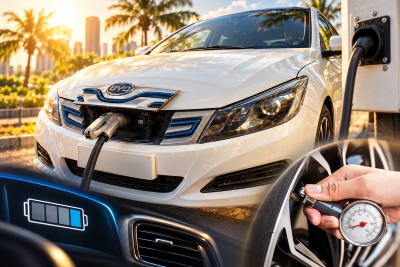
Charged your Electric Car overnight, yet watching your range disappear? Before blaming the battery, discover what could be swallowing your kilometres on Nigerian roads.
The showroom promise was exciting: hundreds of kilometres per charge, freedom from petrol queues and fewer mechanical headaches.
Then came Lagos traffic, the afternoon heat and an expressway run. Suddenly, the remaining range began shrinking faster than expected.
For Nigerian motorists embracing electric vehicles, the question comes quickly: “Is my battery already failing?”
Not necessarily. Advertised range reflects specified test conditions. Your actual distance depends on driving habits, weather and vehicle condition. Before approving expensive repairs, investigate these five potential kilometre thieves.
1. Your AC Wants Its Share
After hours under the Nigerian sun, your cabin can feel like an oven. Naturally, you demand maximum cooling.
But air-conditioning draws electricity from the same battery powering the wheels. In crawling traffic, it keeps consuming energy while you cover little distance.
Park in shade, use a windscreen sunshade and briefly release trapped hot air before cooling the cabin. Once comfortable, choose a moderate temperature.
Where supported, cool the cabin while connected to a suitable charger before departure. This reduces the initial cooling demand on your battery.
Never compromise clear windows or driver comfort merely to save kilometres. www.tesla.com
2. Speed Presents Its Bill
The expressway opens up. Your EV accelerates effortlessly, its quietness disguising how quickly you are travelling.
Meanwhile, electricity consumption climbs.
Higher speeds mean greater air resistance, making the motor work harder. Sustained fast driving can therefore swallow range faster than a moderate, steady pace.
Geotab’s analysis of more than three million EV trips found that, at higher speeds in hot weather, aerodynamic resistance affected range more than cabin cooling.
Accelerate smoothly, obey speed limits and anticipate traffic. Regenerative braking recovers some energy, but cannot refund everything spent during repeated acceleration.
3.Soft Tyres Steal Kilometres
Underinflated tyres increase rolling resistance, forcing your motor to consume more energy. They also generate extra heat and increase the risk of tyre failure.
Check pressures regularly when tyres are cold, using an accurate gauge. Follow the vehicle’s tyre information label or handbook.
“Pump everything to 40” is no substitute for the correct specification. Neither is the maximum pressure printed on the tyre sidewall.
After a severe pothole impact, investigate pulling, vibration or uneven wear. Have tyre condition and alignment checked.
Never release air from hot tyres simply to match the recommended cold pressure.
4.Heat Adds Hidden Demands
Your passengers are not the only ones needing cooling. Many EVs also consume electricity to regulate battery temperature.
During very hot weather, that creates another demand on stored energy. Temperature management may sometimes continue while parked.
Argonne National Laboratory testing found an average range reduction of 14 per cent at approximately 35°C compared with approximately 22°C, with cabin temperature controlled. Results vary between vehicles.
Park in shade where practical, keep cooling openings unobstructed and investigate temperature warnings promptly.
5.The Battery May Be Ageing
Batteries gradually lose capacity with age and use. Eventually, a full charge stores less energy than when the vehicle was new.
However, one disappointing journey proves little.
Compare similar trips, recording starting charge, distance and energy consumption. Follow your manufacturer’s charging guidance: different battery chemistries require different routines.
A sudden, persistent range drop or warning message needs professional investigation. Ask a qualified EV technician to check battery health and cooling-system operation before discussing replacement.
Before condemning your battery, examine your driving, tyres and cooling demands. Those missing kilometres could be telling you to change a habit, rather than replace an expensive component.
©Copyright MOTORING WORLD INTERNATIONAL. All rights reserved. Materials, photographs, illustrations and other digital content on this website, may not be reproduced, published, broadcast, rewritten or redistributed in whole or in part without prior written permission from Motoring World International
Contact: editor@motoringworldng.com


