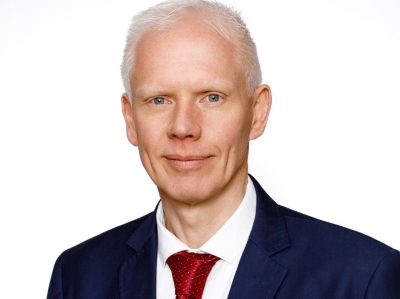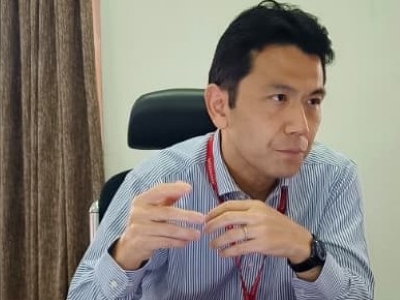
The Managing Director of Honda Automobile Western Africa Ltd, Daisuke Mita, embodies the quiet confidence of a leader steering one of Nigeria’s longest-standing automotive brands through turbulent times. With Honda’s roots in Nigeria stretching back more than four decades, the company has endured policy inconsistencies, foreign exchange volatility and shifting market realities while maintaining its commitment to the country.
In this exclusive interview with Motoring World’s Lagos Bureau Chief, Rotimi Asher, Mita reflects on Honda’s journey in Nigeria, the resilience required to operate in Africa’s largest economy, and the reforms needed to unlock the full potential of the automotive industry. He also shares Honda’s long-term vision for mobility, local manufacturing and sustainable growth in Nigeria.
Excerpts:
Would look back and recall a brief history of when and Honda Automobile Western Africa Limited began operations in Nigeria?
 Mita: Honda has been in Nigeria for over four decades. Our automobile business dates back to the 1970s, so it is well over 40 years now. In addition, we have a motorcycle business, also under Honda, which began operations around 1970 and has been active for over 46 years as a subsidiary.
So, while we operate through two companies, our overall presence in Nigeria spans more than four decades.
If you had to frame a defining headline for Honda Nigeria in the next five years, what would it be?
We aim to grow as a comprehensive mobility company. Honda is unique in that we operate across automobiles, motorcycles, and power products. Our mission goes beyond cars. We support people’s lives across multiple forms of mobility, including even aircraft globally.
By leveraging Honda’s full strengths more effectively, we are pursuing sustainable mid- to long-term growth.
Amid economic headwinds and policy uncertainties, why is Honda still committed to Nigeria for the long term?
 Mita: Sincerely, the situation is very challenging. However, at Honda, our corporate slogan-“The Power of Dreams”-guides us to keep pushing forward.
Nigeria’s population continues to grow, and the gap in effective transportation remains significant. The market potential is still strong, and we believe these opportunities will eventually be harnessed.
What does success look like for Honda Nigeria at 50 years, and what must happen to achieve it?
Mita: Success means bringing joy to everyone connected with Honda—our customers, dealers, employees, and partners. It also means expanding our business, creating more jobs, introducing new products, and helping people achieve their aspirations through our offerings.
To achieve this, several conditions are critical: a stable foreign exchange regime, ideally below ₦1,000 to the dollar, consistent government patronage to support production planning, a legally backed automotive policy to protect investments, and a government-backed hire purchase scheme to boost purchasing power.
How has the Nigerian market influenced Honda’s growth and strategy in West Africa?
Mita: Operating in Nigeria has required resilience. The market has been challenging and often unstable, but it has also pushed us to build a solid business foundation and strengthen our sales capabilities.
Although we are yet to reach full production capacity, we have steadily expanded our presence and positioned ourselves for future growth.
What key lesson has Honda learned from operating in Nigeria?
Mita: To survive in Nigeria, you must be prepared for uncertainty, which makes planning difficult.
However, one remarkable aspect is the resilience of Nigerians. Despite the challenges, people remain hardworking and determined. This aligns closely with Honda’s own philosophy.
We believe in consistent, incremental progress as the foundation for long-term growth, and that mindset has sustained our operations here.
Given Nigeria’s import-driven auto market, how has Honda performed in terms of sales and market share?
Mita: Over the years, our focus has been on sustaining operations rather than pursuing rapid expansion in a difficult environment.
Foreign exchange constraints have affected sales, but we continue to strengthen our sales structure so that we are well-positioned to grow when economic conditions improve.
What distinguishes Honda’s brand in Nigeria’s competitive market?
 Mita: Our strength lies in being a comprehensive mobility company. Beyond automobiles, our motorcycles, generators, and power products play vital roles in everyday life.
Our power equipment supports farmers, our generators provide reliable and fuel-efficient energy, and our motorcycles serve both personal and commercial needs.
Our vehicles are known for durability, safety, and fuel efficiency, and we support customers with five years of free maintenance, ensuring peace of mind and strong resale value.
How have foreign exchange volatility and import regulations impacted operations?
Mita: Foreign exchange challenges affect the entire country, and we are no exception. While the situation has stabilized somewhat, the exchange rate remains too high.
Policy inconsistency is also a major concern. For instance, the automotive policy introduced in 2014 was meant to run until 2024, yet another policy was announced for 2023–2033 without a proper evaluation of the first. Neither has been signed into law.
There is also uncertainty around new directions such as CNG conversion and electric vehicles, without clear frameworks. Meanwhile, local assemblers are still struggling with internal combustion engine (ICE) production.
To navigate these challenges, we have adopted a lean operational strategy.
To what extent has Nigeria’s automotive policy shaped Honda’s investment decisions?
Mita: We have not seen the level of clarity or support initially promised. We began local assembly with a 10-year growth plan, but that vision has not been fully realised.
Our factory remains underutilised due to an unconducive operating environment. While some assemblers have exited the market, we have sustained operations.
What policy reforms are needed to accelerate the sector’s growth?
Mita: The industry needs a catalyst. Demand exists, but purchasing power is very low, which explains the high volume of used car imports.
First, the government must sign the automotive policy into law to provide investor confidence.
Second, it must honour its commitment to patronage by ensuring government agencies prioritize locally assembled vehicles.
Third, a single-digit interest hire purchase scheme must be implemented. In many developed markets, such financing is standard, whereas rates in Nigeria can approach 30 percent—making growth extremely difficult.
At the same time, there should be a gradual and structured approach to regulating used vehicle imports, especially accidented vehicles.
What sustainability and CSR initiatives has Honda introduced in Nigeria?
Mita: As part of our corporate social responsibility efforts, we have focused on empowering women in agriculture in South-West Nigeria.
Through this initiative, ten women farmers received Honda land-tilling machines, water pumps, and motorised backpack sprayers free of charge. This support is aimed at improving productivity and strengthening rural livelihoods.
What is Honda’s long-term vision for Nigeria?
Mita: Nigeria remains a key market in West Africa. Our long-term vision is to meet domestic demand and continue building a sustainable business. We still strongly believe in the future of our operations here.
Are there plans to expand local manufacturing or introduce new products?
Mita: Yes, we have expansion plans. However, progress has been constrained by the challenges mentioned earlier.
That said, these plans remain achievable if the right policy and economic conditions are put in place.
©Copyright MOTORING WORLD INTERNATIONAL. All rights reserved. Materials, photographs, illustrations and other digital content on this website, may not be reproduced, published, broadcast, rewritten or redistributed in whole or in part without prior written permission from Motoring World International
Contact: editor.motoringworldng@motoringworldng.com