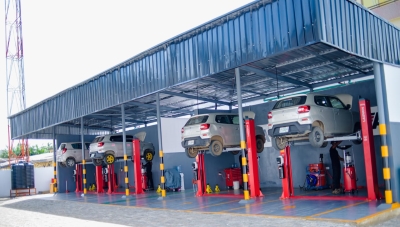
Jacques Taylor is the Managing Director of Tata Africa, a leading commercial vehicle company with operations across Sub-Saharan Africa. In this chat, he discusses why improved trade corridors, transport infrastructure and regional connectivity are critical to unlocking Africa’s next phase of economic growth.
Q: Africa has traditionally focused on exporting commodities through ports. Why do you believe the conversation is changing?
Taylor: Africa’s next phase of economic growth depends on connecting African economies to one another rather than simply connecting them to ports that export value overseas. The focus is shifting from export corridors to internal trade corridors that link manufacturers, farmers, mines and businesses across borders. These connections create value within Africa and strengthen regional economies.
Q: How significant is the African Continental Free Trade Area (AfCFTA) in driving this transformation?
Taylor: AfCFTA is a game changer. It is the world’s largest free trade area by the number of participating countries and is projected to help grow Africa’s economy to about US$29 trillion by 2050. But free trade cannot succeed without efficient transport infrastructure. Around 80 per cent of freight and 90 per cent of passenger movement in Africa takes place by road, yet only about 53 per cent of the continent’s roads are paved for all-weather use. Closing that gap is essential.
Q: You have often described trade corridors as economic corridors. What do you mean by that?
Taylor: Roads are no longer just transport routes. Together with border posts and logistics networks, they determine where industries are established, where businesses invest and where jobs are created. Africa needs integrated transport ecosystems that support industrialisation, small businesses and efficient movement of goods and people, not simply more roads.
Q: Africa is pushing for more local manufacturing and value addition. What role does transport play in achieving that?
Taylor: Manufacturing alone is not enough. Even if Africa processes more of its minerals and expands its industrial base, those products must still reach markets efficiently. Without reliable logistics, the economic benefits will be limited. Efficient transportation is just as important as manufacturing itself.
Q: Is enough investment going into Africa’s transport infrastructure?
Taylor: Progress is being made. The African Development Bank invested more than US$13 billion in regional road corridor projects between 2004 and 2022, constructing over 18,000 kilometres of highways across 25 corridors. However, projections show that more than 60,000 kilometres of critical road links still require upgrading. Achieving that will require substantial public-private partnerships.
Q: Which transport corridors best demonstrate Africa’s progress?
Taylor: The Maputo Corridor linking South Africa to Mozambique’s largest port is a good example, as is the Dar es Salaam Corridor connecting Tanzania with landlocked countries such as Zambia, Burundi and Rwanda. These projects are transforming regional trade, but much more infrastructure is still required to unlock Africa’s full economic potential.
Q: What role do commercial vehicle manufacturers like Tata Africa play in this transformation?
Taylor: Infrastructure alone cannot move goods. Trade corridors also require reliable transport operators, maintenance support and logistics partners. That’s where commercial vehicle manufacturers make a real difference. Our responsibility is to provide vehicles that perform reliably under Africa’s demanding operating conditions while keeping operating costs low for customers.
Q: How is Tata Africa responding to these unique market needs?
Taylor: We have assembly operations in South Africa, Kenya, Nigeria, Tanzania and Uganda, with business operations across 19 Sub-Saharan African countries. Our commercial vehicle range has been developed specifically for African conditions, with emphasis on productivity, durability, maximum uptime and lower total cost of ownership. We also support mining, agriculture, passenger transport and the growing number of youth- and women-owned businesses across the continent.
Q: After roads and vehicles, what is the next big challenge for Africa’s transport sector?
Taylor: Policy reform. Governments need to reduce delays at border crossings, harmonise transport regulations and simplify cross-border logistics. Infrastructure and vehicles alone cannot deliver seamless trade if administrative bottlenecks remain.
Q: Looking ahead, what will determine Africa’s economic success?
Taylor: Africa’s future will not be defined only by what it produces but by how efficiently producers, manufacturers and businesses are connected to markets. Trade corridors are the arteries of economic growth. Continued investment in infrastructure, supportive policies and modern transport ecosystems will determine how competitive and prosperous Africa becomes. At Tata Africa, we see supporting that connectivity as one of our most important contributions to the continent’s future.
©Copyright MOTORING WORLD INTERNATIONAL. All rights reserved. Materials, photographs, illustrations and other digital content on this website, may not be reproduced, published, broadcast, rewritten or redistributed in whole or in part without prior written permission from Motoring World International
Contact: editor@motoringworldng.com