ANNIE ALLEN (UK Bureau Chief)
The battle for America’s automotive future is heating up—and Detroit wants Washington to slam the door before China’s rapidly expanding car industry gets inside.
America’s biggest automakers have thrown their weight behind a push for Congress to permanently block Chinese vehicles, connected-car software and hardware from entering the US market.
The Alliance for Automotive Innovation, whose members include General Motors, Ford, Toyota, Volkswagen, Hyundai, Honda and Stellantis, is demanding that lawmakers act before the end of the year.
The warning is stark: China’s automotive offensive may already be sweeping across the world, and America cannot afford to wait until Chinese brands establish a beachhead on its soil.
Alliance CEO John Bozzella told Congress that Chinese automakers are exporting subsidised vehicles and connected technologies around the world at an extraordinary pace.
His organisation wants Washington to turn existing restrictions into permanent law, arguing that China’s ambition to dominate global automotive manufacturing has moved beyond ordinary commercial competition.
The stakes are particularly high in electric vehicles.
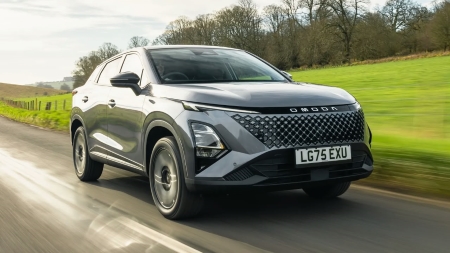
Chinese manufacturers such as BYD, Chery and SAIC Motor have emerged as formidable global competitors, combining large-scale manufacturing, aggressive pricing and rapidly advancing EV technology. Their expansion has already transformed competition in several international markets.
The US auto industry now fears what could happen if that offensive reaches American consumers on a large scale.
But this is not simply about cheap cars.
Washington’s biggest concern is increasingly what the modern car can see, collect and communicate.
Bluetooth, Wi-Fi, cellular connectivity and some satellite communication technologies are covered by US restrictions because connected vehicles can potentially gather huge volumes of information about vehicle users and their surroundings.
For American policymakers, that raises an uncomfortable question: could a car become a rolling data-collection device?
The Senate Commerce Committee approved legislation in July to strengthen restrictions on Chinese automakers, but the proposed law still faces obstacles before final passage.
Senators Bernie Moreno, a Republican from Ohio, and Elissa Slotkin, a Michigan Democrat, have backed legislation designed to codify Biden-era restrictions that effectively prevent Chinese automakers from selling or manufacturing passenger vehicles in America.
The Alliance wants the legislation to go further, specifically preventing the Commerce Department from authorising Chinese companies such as BYD, Chery and SAIC to manufacture, sell or import connected vehicles into the US.
Bozzella argues that passing the legislation would deliver a bipartisan warning to Beijing that China’s drive for global automotive dominance will be treated as a national-security issue.
But Washington’s proposed automotive firewall is already creating complications.
Senate Commerce Committee Chairman Ted Cruz has warned that a provision targeting companies with more than 15% Chinese ownership could inadvertently affect Mercedes-Benz because of its nearly 20% passive Chinese investment.
Cruz says the bill requires changes before it can become law.
Meanwhile, Polestar has already found itself caught in the tightening US net. The Sweden-based EV manufacturer, majority-owned by China’s Geely Holding, said in June that the Trump administration was forcing it to stop selling vehicles in the US from the 2027 model year.
Beijing strongly opposes the restrictions.
The Chinese embassy in Washington argues that China remains open to foreign automakers and points to the success of Tesla, Buick, Toyota and Ford in the Chinese market.
But with Chinese brands rapidly expanding across global markets, America’s traditional automakers appear unwilling to gamble on what could happen if those brands are eventually allowed to compete freely on American roads.
For Detroit, the message to Washington is becoming unmistakable: keep the gate shut—or risk letting China’s automotive revolution drive straight into America.
©Copyright MOTORING WORLD INTERNATIONAL. All rights reserved. Materials, photographs, illustrations and other digital content on this website, may not be reproduced, published, broadcast, rewritten or redistributed in whole or in part without prior written permission from Motoring World International
Contact: editor@motoringworldng.com