MIRIAM LAWAL
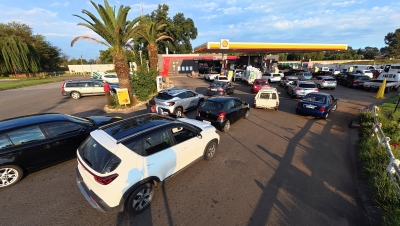
South African motorists, commuters and businesses are bracing for another painful financial squeeze as steep fuel price increases take effect from October 7, with the National Automobile Dealers’ Association (NADA) warning that the shock will deepen already mounting affordability pressures.
Petrol prices are set to jump by R3.12 per litre for 93 octane and R3.33 for 95 octane, while wholesale diesel prices will rise by approximately R2.84 and R3.24 per litre for the respective sulphur grades.
For a motorist filling a 50-litre tank, the latest increase means paying an additional R156 to R166.50 every time the tank is filled—another heavy blow to household budgets already under pressure from rising living and borrowing costs.
“For many South Africans, transport is essential to earning a living, taking children to school and accessing essential services,” said Thembinkosi Pantsi, Vice Chairperson of NADA. “The journey to work does not get shorter when fuel becomes more expensive. Households have to find that additional money within budgets that are already stretched.”
But the pain is not confined to private vehicle owners.
Millions of South Africans who depend on minibus taxis for daily commuting could also feel the impact, particularly in communities where reliable public transport alternatives are limited.
NADA warned that higher fuel costs could push up operating expenses for taxi operators, potentially triggering further pressure on fares and leaving commuters with even less disposable income for food, electricity and other basic necessities.
“Higher fuel costs put pressure on taxi operators. If these translate into higher fares, commuters who can least afford another increase will have less money for food, electricity and other essentials,” Pantsi said. “Many have little flexibility to change how or where they travel.”
Businesses are also facing the prospect of a fresh cost shock, especially companies that depend heavily on diesel-powered vehicles to transport goods, make deliveries or provide essential services.
As transport and logistics costs rise, businesses may have little choice but to pass some of the additional burden on to consumers, potentially pushing up the prices of goods and services.
The latest fuel increase arrives against a backdrop of already elevated inflation and borrowing costs. Annual headline consumer inflation stood at 4.4% in August, while transport inflation was considerably higher at 8.8%—figures that were recorded before the October fuel increase takes effect.
The Reserve Bank’s September decision to raise the policy rate by 25 basis points to 7.25%, pushing prime lending rates to 10.75%, has added another layer of pressure on consumers and businesses servicing loans.
“Consumers are not dealing with these pressures in isolation,” Pantsi said. “Vehicle repayments, fuel, insurance, maintenance, food and electricity all compete for the same disposable income. It is their combined effect that determines what a household can afford.”
Although stronger new-vehicle sales in September offered some encouragement heading into the final quarter, NADA cautioned that maintaining the momentum could become increasingly difficult as the latest interest-rate and fuel-price increases begin to hit household finances.
“A manageable monthly instalment does not necessarily mean that a vehicle is affordable,” Pantsi said. “Buyers should consider what it will cost to finance, fuel, insure, service and maintain, based on their actual travel needs.”
With the latest fuel increases threatening to squeeze already-stretched budgets, NADA is urging motorists to cut avoidable fuel consumption by maintaining recommended tyre pressures, adopting smoother driving habits where possible, and keeping vehicles properly serviced and maintained.
“Dealers have an important role in helping customers match vehicles and finance options to their circumstances,” Pantsi concluded. “The aim is to support choices that remain affordable throughout ownership.”
NADA is a constituent association of the Retail Motor Industry Organisation (RMI).
©Copyright MOTORING WORLD INTERNATIONAL. All rights reserved. Materials, photographs, illustrations and other digital content on this website, may not be reproduced, published, broadcast, rewritten or redistributed in whole or in part without prior written permission from Motoring World International
Contact: editor@motoringworldng.com