FEMI OWOEYE
Nigeria’s automotive industry may be heading for a major policy shake-up as the Senate signals its readiness to fast-track legislation designed to protect local vehicle manufacturers, curb dependence on imported used vehicles and unlock the country’s automotive production capacity.
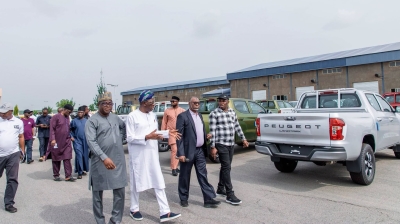
The Senate Committee on Industry gave the indication during an oversight visit, conducted in collaboration with the National Automotive Design and Development Council (NADDC), to automotive facilities in Kano and Kaduna States, where lawmakers assessed the country’s capacity to produce vehicles for the domestic market.
At the centre of the proposed intervention is the National Automotive Industry Bill 2026, which the committee says it is prepared to accelerate through the legislative process. If enacted with appropriate provisions, the proposed law could reshape the operating environment for vehicle assemblers, manufacturers and other players across Nigeria’s automotive value chain.
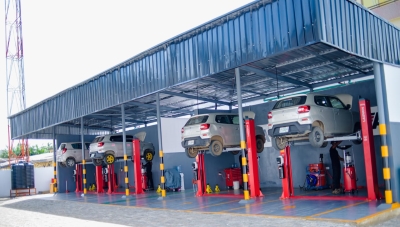
The oversight exercise, which began in Kano before proceeding to Kaduna on October 4, 2026, took lawmakers to the NADDC Automotive Training/CNG Conversion Centre in Kano, PAN Nigeria Ltd and D-PAN in Kaduna. The visits were designed to evaluate their operational capacity, identify production bottlenecks and determine how effectively the facilities could contribute to meeting local demand.
Speaking during the inspection, Chairman of the Senate Committee on Industry, Senator Francis Adenigba Fadahunsi, expressed satisfaction with the facilities visited, describing them as operational and capable of supporting large-scale production.
He, however, emphasised that sustained maintenance and stronger government backing would be essential to enable the facilities to operate at full capacity.
Fadahunsi also called for policies that would give locally manufactured vehicles and mobility products greater access to the Nigerian market. He specifically advocated restrictions on foreign-used vehicles, popularly known as Tokunbo, as well as imported tricycles that could be produced locally.
According to him, protecting domestic production through appropriate legislation could strengthen local manufacturing, create employment opportunities and safeguard investments already committed to the automotive sector.
The senator said lawmakers needed firsthand knowledge of the challenges confronting industrial facilities before formulating effective legislation.
“We are the lawmakers, and the essence of the oversight is to see and know the challenges, so we can make sure that the law is passed,” he stated.
His remarks underscore the committee’s intention to translate its findings into legislative action, including possible amendments to existing laws and restrictions on foreign-used vehicle imports where considered necessary.
For Nigerian automakers, the proposed intervention could become a significant policy development, particularly if legislation is accompanied by effective implementation, affordable vehicle financing and stronger demand for locally assembled products.
Director-General of NADDC, Otunba Oluwemimo Joseph Osanipin, described the visit as particularly important under the Federal Government’s Nigeria First Policy, which seeks to encourage greater patronage of Nigerian-made products.
He said a key question confronting policymakers was whether Nigeria possessed the industrial capacity to manufacture enough vehicles to meet domestic demand. The facilities inspected, he argued, demonstrated that the country had the necessary industrial foundation.
Osanipin acknowledged that several obstacles continued to constrain the sector but said the council was working with relevant government institutions and industry stakeholders to address them systematically.
He identified legislation, patronage and access to credit as critical areas requiring attention, stressing that local manufacturers needed not only the capacity to produce vehicles but also policies and financing mechanisms that would enable Nigerians to buy them.
On vehicle financing, the NADDC chief disclosed that the council was collaborating with the Nigerian Consumer Credit Corporation (CrediCorp) to expand credit schemes beyond their current focus on two- and three-wheelers to cover additional vehicle categories.
The initiative could help address one of the industry’s persistent challenges: the gap between the availability of locally assembled vehicles and the purchasing power of prospective customers.
Osanipin expressed optimism that coordinated action by government institutions, lawmakers and industry stakeholders would gradually remove barriers to growth and strengthen Nigeria’s position in automotive manufacturing.
The emerging policy direction presents both an opportunity and a challenge. While stronger protection for local manufacturers could encourage investment, expand production and create jobs, the effectiveness of the proposed measures will depend on their design, implementation and impact on vehicle prices and consumer choice.
For now, the Senate’s pledge to accelerate the National Automotive Industry Bill 2026 places automotive legislation firmly on the industry’s policy agenda, raising expectations among local manufacturers seeking a more supportive environment in which to compete and expand.
©Copyright MOTORING WORLD INTERNATIONAL. All rights reserved. Materials, photographs, illustrations and other digital content on this website, may not be reproduced, published, broadcast, rewritten or redistributed in whole or in part without prior written permission from Motoring World International
Contact: editor@motoringworldng.com