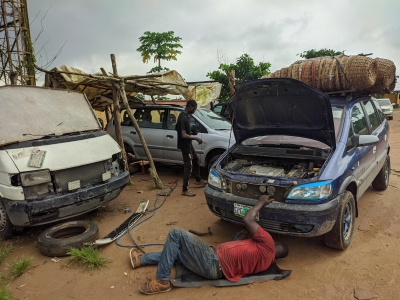
There comes a point when the workshop stops being a place for routine servicing and starts feeling like a second home.
First, a suspension component fails. Then a sensor. Next come overheating, transmission trouble or electrical faults. Before long, another frightening quotation arrives.
Is the car still worth repairing?
For Nigerian motorists, rising costs of parts, labour, tyres and maintenance make this question urgent. But age alone should decide the answer. A well-maintained 10-year-old vehicle may cost less to run than a neglected five-year-old car.
The crucial question is: What does yours cost?
Add Up Everything
Review the past 12 months. Total servicing, repairs, tyres, batteries, insurance, registration, fuel and other expenses. Divide by 12 to establish your monthly running cost.
Include taxis, ride-hailing fares and alternative transport during breakdowns. For commercial operators, add lost income from days spent off the road.
Keep receipts and record each workshop visit. Figures reveal patterns that memory, frustration or affection can easily obscure.
Watch for Recurring Trouble
Repeated failures deserve attention. If overheating returns, the transmission repeatedly misbehaves or electrical faults resist repairs, seek a diagnosis from a technician.
Poor workmanship or inferior parts may explain recurring trouble. Establish the cause before condemning the whole vehicle.
Parts availability also matters. A priced component becomes expensive if waiting weeks for delivery leaves you paying for alternative transport.
Seven Warning Signs
- Replacement deserves serious consideration when:
- Repair bills arrive frequently and absorb a substantial share of the vehicle’s value.
- The same faults return despite competent repairs.
- Several safety systems need costly work.
- Fuel consumption remains excessive after proper diagnosis and servicing.
- Workshop downtime repeatedly disrupts work or family life.
- The engine or transmission needs major repairs or replacement.
Another substantial repair would approach the car’s market value.
Never postpone essential brake, tyre, steering or suspension work while weighing your options. An unsafe vehicle should remain off the road until repaired.
Compare the Alternatives
A large repair bill does not automatically justify another car. A single repair on an otherwise sound vehicle may buy years of useful service.
Obtain written estimates, including likely additional work. Compare these with the full cost of a replacement: purchase price, financing, insurance, registration, maintenance and fuel.
Have any prospective replacement inspected. Exchanging a familiar problem for an unknown collection of faults solves little.
Decide With Figures
Past spending cannot be recovered simply by keeping the car. Focus on likely future costs, reliability, safety and what you can comfortably afford.
There is no compulsory retirement age for a vehicle. Sometimes, the cheapest car is the one you already own.
But when repeated failures consume money, time and confidence, replacement may make better sense.
Loyalty should not become a workshop subscription. Let the figures, a sound diagnosis and your transport needs determine when to say goodbye.
©Copyright MOTORING WORLD INTERNATIONAL. All rights reserved. Materials, photographs, illustrations and other digital content on this website, may not be reproduced, published, broadcast, rewritten or redistributed in whole or in part without prior written permission from Motoring World International
Contact: editor@motoringworldng.com