ANNIE ALLEN (UK Bureau Chief)
The petrol engine may be under pressure from Europe’s electric-car revolution, but the latest Green NCAP environmental tests have delivered a striking reminder: good engineering can still make conventional cars surprisingly green.
The Renault Clio TCe 115 Techno has emerged as one of the strongest-performing petrol superminis tested by Green NCAP, scoring 62% and three-and-a-half stars in the organisation’s latest sustainability assessment.
What makes the result particularly notable is that the Clio achieved it without hybrid or electric assistance.
The 2026 Clio, powered by a three-cylinder turbocharged petrol engine with direct fuel injection, impressed Green NCAP with a combination of relatively low weight, efficient fuel consumption and effective emissions control. At just 1,186kg, its relatively light kerb weight also helped reduce its environmental burden.
The Clio scored 6.8/10 for Clean Air, 7.1/10 for Energy Efficiency and 4.9/10 for Greenhouse Gases, putting it among the stronger petrol-powered performers in its class.
Its result also puts pressure on the assumption that meaningful environmental gains in affordable cars can only come through electrification.
Green NCAP, however, found that electric vehicles still occupied the top positions in the latest assessment. The Kia EV4 Earth Electric achieved an impressive 90% and five stars, while the electric Mazda 6e scored 85% and four-and-a-half stars.
The EV4 benefited from strong energy efficiency, aerodynamic design and a robust real-world range, including in cold conditions. Its European production also helped its lifecycle environmental assessment.
The Mazda 6e delivered consistent energy consumption across temperatures and strong real-world range, although its manufacturing and distribution footprint reduced its overall score.
The latest tests also exposed significant differences among petrol, diesel and hybrid models.
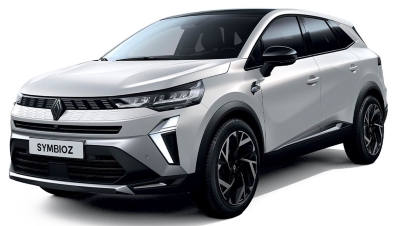
The Renault Symbioz E-Tech Full Hybrid 160 scored 64% and three-and-a-half stars, narrowly ahead of the Clio. Its warm-weather laboratory fuel consumption was an impressive 4.2 litres/100km, although efficiency deteriorated substantially in cold conditions and during faster highway driving.
The MG3 1.5 Petrol managed three stars and 51%. Its light 1,162kg body helped its environmental performance, but real-world mixed fuel consumption of 5.8 litres/100km and elevated emissions during cold starts held back its score.
The Volkswagen Tiguan 2.0 TDI Elegance scored 48% and two-and-a-half stars. Although it achieved a strong 8.7/10 for exhaust emissions, its fossil-fuel dependence pushed lifecycle emissions to 246g CO₂-equivalent/km.
The Kia K4 1.6 T-GDI Spirit also received two-and-a-half stars, scoring 46%. Its lifecycle emissions reached 257g CO₂-equivalent/km, with 160g attributed directly to tailpipe emissions.
The results underline an important distinction in environmental vehicle testing: controlling exhaust pollutants is only part of the story. Green NCAP also considers the broader lifecycle impact of a vehicle, including energy use and greenhouse-gas emissions associated with production and operation.
For consumers seeking an affordable conventional car, however, the Clio’s performance represents a significant finding. It shows that a petrol-powered vehicle does not automatically have to be among the worst environmental performers.
Green NCAP Technical Manager Dr Aleksandar Damyanov said the Clio demonstrates that “good engineering” can reduce the environmental impact of conventional cars through low weight, an efficient engine and effective emissions control.
The latest Green NCAP results therefore deliver a two-sided message: electric vehicles can offer major sustainability advantages, but intelligent engineering is still capable of squeezing considerably better environmental performance from affordable petrol cars.
©Copyright MOTORING WORLD INTERNATIONAL. All rights reserved. Materials, photographs, illustrations and other digital content on this website, may not be reproduced, published, broadcast, rewritten or redistributed in whole or in part without prior written permission from Motoring World International
Contact: editor@motoringworldng.com