Global oil prices climbed sharply on Tuesday after fresh attacks on commercial vessels near the Strait of Hormuz reignited fears of disruptions to one of the world’s most critical energy shipping routes.
International benchmark Brent crude rose 89 cents (1.24%) to $72.88 per barrel, while U.S. West Texas Intermediate (WTI) gained 71 cents (1.04%) to $69.26 per barrel.
The rally was triggered by reports that commercial vessels were attacked near the strategic waterway linking the Persian Gulf to global markets.
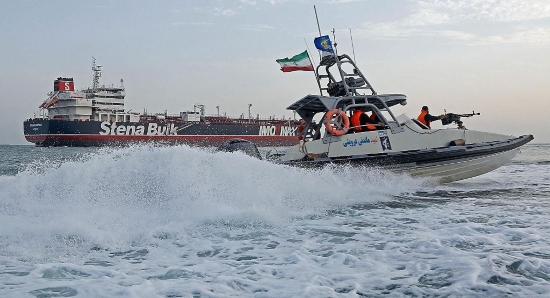
According to maritime security sources, a Saudi-flagged crude oil tanker sustained damage near the coast of Oman after a Qatari liquefied natural gas (LNG) tanker was also struck while navigating the Omani side of the Strait of Hormuz.
The incidents followed reports that Iran’s Revolutionary Guards launched missile attacks on ships transiting the vital shipping corridor overnight, raising fresh concerns over the security of global energy supplies.
“The overriding theme this morning is a ship being shot at in the Strait of Hormuz,” said Ole Hansen, an analyst at Saxo Bank.
He noted that the attacks had reintroduced a geopolitical risk premium into the oil market, warning that any further escalation could quickly push Brent crude towards $75 per barrel, with $80 emerging as the next major price target.
The latest tensions come as diplomatic efforts between the United States and Iran remain on shaky ground.
Iran’s Foreign Minister declared on Tuesday that negotiations with Washington would not proceed as long as U.S. threats continued, following President Donald Trump’s warning that the United States would “finish the job” unless an agreement was reached.
Energy markets are closely watching developments because the Strait of Hormuz remains one of the world’s most strategically important oil chokepoints. Before the outbreak of the Iran conflict, the narrow waterway handled roughly 20 percent of global oil and LNG supplies, making any disruption a major concern for world energy markets.
Despite the heightened tensions, shipping data showed that two Japanese-owned supertankers carrying Saudi crude successfully exited the Strait of Hormuz on Tuesday, offering some reassurance that oil exports through the region continue despite the security risks.
Looking beyond the immediate crisis, analysts at Societe Generale believe the global oil market could shift from a supply deficit to a surplus towards the end of 2026 and into 2027 as production growth outpaces demand.
The bank consequently lowered its oil price forecasts, projecting Brent crude at $75 per barrel in the fourth quarter of 2026, down from an earlier forecast of $83, while cutting its 2027 average forecast to $73 per barrel from $79.
Although inventories are expected to recover gradually, analysts caution that escalating geopolitical tensions in the Middle East could continue to trigger sharp swings in global oil prices.
©Copyright MOTORING WORLD INTERNATIONAL. All rights reserved. Materials, photographs, illustrations and other digital content on this website, may not be reproduced, published, broadcast, rewritten or redistributed in whole or in part without prior written permission from Motoring World International
Contact: editor@motoringworldng.com