ANNIE ALLEN (UK Bureau Chief)
Nissan’s decision to sell its iconic Rosslyn assembly plant in South Africa to Chinese auto giant Chery has brought the curtain down on six decades of vehicle manufacturing in Africa’s most industrialized automotive market, a dramatic development that could create fresh opportunities for Nigeria to attract new investments in vehicle assembly and manufacturing.
The transaction, which has received a favourable recommendation from South Africa’s Competition Commission subject to employment and local-content conditions, will see Chery acquire the Rosslyn manufacturing assets and begin local production of selected SUV models.
While the deal marks a major victory for Chery’s African expansion strategy, it also signals the end of an era for Nissan, whose manufacturing presence in South Africa dates back to 1966.
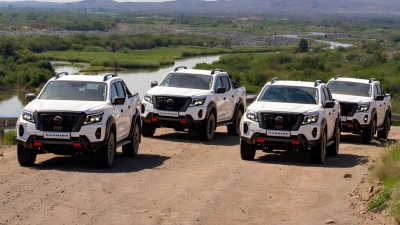
The Rosslyn facility, located in Gauteng Province, most recently produced the Nissan Navara pickup. However, Nissan announced earlier this year that it would discontinue vehicle manufacturing operations in South Africa, citing economic pressures, declining plant utilisation and broader global restructuring efforts.
For Nigeria, the development offers an important lesson and a potential opportunity.
As South Africa loses one of its oldest vehicle manufacturing operations, Nigeria can position itself as the next frontier for automotive investment by strengthening implementation of its automotive policy, improving infrastructure, deepening local content development and providing incentives that attract global automakers seeking new production hubs in Africa.
Industry analysts note that Chinese brands are rapidly expanding across Africa, and Nigeria’s huge population, growing vehicle market and strategic West African location could make it an attractive destination for future assembly and manufacturing projects.
Nissan’s South African journey spanned nearly 60 years, beginning with vehicle assembly from completely knocked-down kits before the establishment of the Rosslyn plant in 1973. Over the decades, the company invested billions of rand in expanding production capacity and introducing new models.
Several popular Nissan vehicles rolled out of the plant, including the NP300 Hardbody, NP200 and the latest-generation Navara.
The NP200, introduced in 2008, became one of South Africa’s most successful half-tonne pickups, particularly among small businesses, before production ended in 2024. Nissan also ventured into the country’s lucrative taxi market with the NV350 Impendulo minibus.
Despite these successes, the Japanese automaker gradually lost market share as competition intensified, particularly from aggressive Chinese and Indian brands that have transformed the African automotive landscape.
The latest-generation Navara was launched from Rosslyn in 2021 following a massive R3-billion investment, but changing market realities and global restructuring plans eventually sealed the plant’s fate.
Jordi Vila, President of Nissan Africa, described the agreement as the best available solution for employees, customers and stakeholders.
“Nissan has a long and proud history in South Africa and has been working to find the best solution for our people, our customers and our partners,” Vila said.
He added that the transaction would help preserve jobs and sustain the plant’s contribution to South Africa’s automotive sector.
Although manufacturing operations are ending, Nissan is not abandoning the South African market. The company will continue as an importer and distributor, offering products such as the Magnite, X-Trail and imported Navara models.
For Chery, the acquisition represents a major milestone. The Chinese automaker has enjoyed explosive growth in South Africa through imports but has never operated a local manufacturing facility. Establishing production at Rosslyn will deepen its footprint and strengthen its position in Africa’s largest vehicle market.
The development underscores the shifting balance of power in the global automotive industry, with Chinese manufacturers increasingly filling spaces once dominated by traditional Japanese, European and American brands.
As one automotive chapter closes in South Africa, another may be opening elsewhere on the continent; and Nigeria could emerge as one of the biggest beneficiaries if policymakers move swiftly to seize the moment.
©Copyright MOTORING WORLD INTERNATIONAL. All rights reserved. Materials, photographs, illustrations and other digital content on this website, may not be reproduced, published, broadcast, rewritten or redistributed in whole or in part without prior written permission from Motoring World International
Contact: editor.motoringworldng@motoringworldng.com