FEMI OWOEYE
Escalating conflict in the Middle East has pushed global oil prices towards their biggest weekly gain in months, sparking fresh concerns that Nigerians could soon face another round of higher petrol, diesel and transport costs.
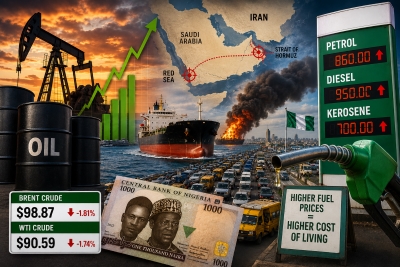
Although crude prices eased slightly on Friday after Thursday’s sharp rally, they remain on track for massive weekly gains. Brent crude slipped 1.8 per cent to $98.87 a barrel after surging above $100 for the first time since May, while U.S. West Texas Intermediate (WTI) fell 1.7 per cent to $90.59. Brent is still set for a 12 per cent weekly rise and WTI nearly 10 per cent.
The price surge followed attacks by Iran-backed Houthi rebels on two Saudi oil tankers in the Red Sea, heightening fears that the conflict could disrupt global oil supplies through the Red Sea and the Strait of Hormuz—two of the world’s most strategic energy shipping routes.
For Nigeria, the development presents a mixed blessing. While higher crude prices could boost the country’s oil export earnings and improve government revenue, they also threaten to increase the cost of imported refined petroleum products, potentially driving up pump prices and worsening inflation.
With petrol prices now largely determined by market forces following subsidy removal, any sustained increase in international crude prices could quickly filter through to filling stations across the country.
“Major hubs of oil production or supply routes are surrounded by war,” said PVM Oil Associates analyst John Evans, who described the short-term outlook for oil prices as bullish.
The crisis intensified after U.S. President Donald Trump threatened “major military punishment” against Iran and its Houthi allies, while Tehran reportedly encouraged the Houthis to shut the Bab el-Mandeb shipping route if attacks on Iranian infrastructure continue.
Market anxiety has also been reflected in shipping activity, with tanker movements through the Strait of Hormuz falling to their lowest level since May, according to analytics firm Kpler.
Analysts at JPMorgan warned that every additional month of supply disruption could add $7 to $8 per barrel to Brent crude, potentially pushing average prices to around $114 a barrel if the crisis drags on for three months.
The pressure on global energy markets was compounded by fresh attacks on oil infrastructure in Eastern Europe, with Russia reporting strikes on Ukrainian ports and Kazakhstan temporarily cutting oil production after suspected Ukrainian drone attacks shut its main Black Sea export terminal.
For Nigerian motorists and businesses already grappling with high fuel and transportation costs, a prolonged Middle East conflict could translate into even steeper energy prices in the weeks ahead.
©Copyright MOTORING WORLD INTERNATIONAL. All rights reserved. Materials, photographs, illustrations and other digital content on this website, may not be reproduced, published, broadcast, rewritten or redistributed in whole or in part without prior written permission from Motoring World International
Contact: editor@motoringworldng.com