ANNIE ALLEN
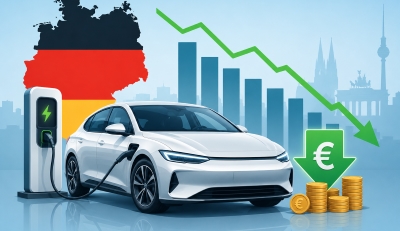
Electric vehicles are becoming significantly cheaper to build, but many buyers are still paying more at the dealership as manufacturers increasingly shift their focus to larger, more expensive models.
This is the key finding of a new study by the International Council on Clean Transportation (ICCT) and Germany’s Fraunhofer Institute for Systems and Innovation Research (Fraunhofer ISI), which examined developments in Germany’s electric vehicle market between 2020 and 2025.
The report reveals that when vehicles with similar specifications are compared, the prices of battery electric vehicles (BEVs) fell by about 18 per cent after adjusting for inflation over the five-year period. In contrast, comparable petrol and diesel-powered vehicles recorded a slight price increase of around two per cent.
Despite this decline in like-for-like prices, the average price paid by consumers actually increased because carmakers introduced more premium electric models with larger batteries, longer driving ranges and additional features.
According to the study, the median price of a battery electric vehicle climbed by 42 per cent to approximately €53,000, while conventional internal combustion engine vehicles (ICEVs) recorded a more modest 15 per cent increase over the same period.
The researchers attributed the higher average EV price not to rising production costs but to changing consumer choices and manufacturers’ growing emphasis on larger, better-equipped vehicles.
One of the biggest drivers of lower production costs has been the sharp decline in battery prices. Inflation-adjusted global battery costs dropped by between 35 and 37 per cent during the period under review. However, instead of passing all the savings directly to consumers, manufacturers invested much of the cost reduction in improving vehicle performance.
As a result, the average driving range of electric vehicles increased by about one-third, giving motorists significantly greater travel distances on a single charge.
The German market also witnessed an explosion in consumer choice. The number of battery electric vehicle models available more than quadrupled to 159, while the number of petrol and diesel models declined to 194, reflecting the automotive industry’s accelerating transition toward electrification.
The findings underscore the rapid evolution of the electric vehicle market, where technological improvements are making EVs increasingly competitive even as consumers continue to gravitate towards larger and more sophisticated models.
For Nigeria and other emerging automotive markets, the report offers another indication that electric vehicles are becoming more affordable to manufacture, a trend that could eventually reduce purchase prices as local assembly expands and battery technology continues to improve.
©Copyright MOTORING WORLD INTERNATIONAL. All rights reserved. Materials, photographs, illustrations and other digital content on this website, may not be reproduced, published, broadcast, rewritten or redistributed in whole or in part without prior written permission from Motoring World International
Contact: editor@motoringworldng.com