At first glance, the Federal Government’s newly approved 2026 Fiscal Policy Measures (FPM) appear well-intentioned, an effort to stimulate economic activity, ease import costs, and recalibrate revenue generation. However, beneath the surface, the policy reveals a fundamental contradiction that could deal a significant blow to Nigeria’s fragile but promising automotive assembly and manufacturing sector.
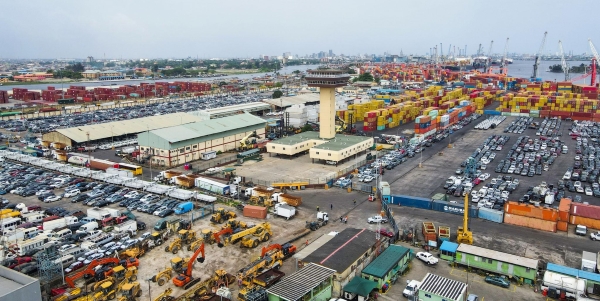
The most consequential provision-the reduction of import duty on fully built vehicles (FBUs) from 70 percent to 40 percent strikes at the very heart of the local automotive policy framework. It is a move that risks reversing over a decade of painstaking progress and policy direction.
A Direct Contradiction of NAIDP Objectives
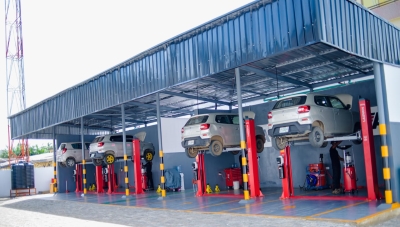
Since 2013, Nigeria’s automotive policy, anchored in the Nigeria Automotive Industry Development Plan (NAIDP), has pursued a clear and deliberate goal: discourage the importation of fully built vehicles while incentivising local assembly and, ultimately, full-scale manufacturing.
The high tariff regime on FBUs was not accidental; it was strategic. It created a pricing advantage for locally assembled vehicles, attracted investment into assembly plants, and laid the groundwork for backward integration into component manufacturing.
By slashing FBU tariffs to 40 percent, the government has effectively dismantled this protective barrier. Imported vehicles will now become significantly cheaper, eroding the competitive edge of locally assembled units—many of which already struggle with high production costs driven by infrastructure deficits, forex volatility, and limited economies of scale.
In essence, the new policy sends a conflicting message: while one arm of government promotes local production, another actively incentivises importation.
Policy Inconsistency: The Achilles’ Heel of Industrial Growth
One of the greatest challenges facing Nigeria’s automotive sector has been policy inconsistency. Investors, both local and international, require stability, predictability, and long-term commitment.
The NAIDP, despite its imperfections, provided that framework. It attracted global brands, encouraged joint ventures, and led to the establishment of several assembly plants across the country.
Yet, more than a decade later, the policy still awaits formal legislative backing. Instead of strengthening and institutionalizing it, the new FPM undermines its core principles.
For manufacturers who have committed capital, built facilities, and developed local capacity based on the existing tariff structure, this policy shift represents a sudden and destabilizing change in the rules of engagement.
The Illusion of “Support” for Local Industry
The government has argued that exemptions, such as those for locally manufactured vehicles and electric vehicles, demonstrate continued support for domestic industry. But these measures, while commendable in isolation, do little to offset the broader impact of cheaper imports.
Local assembly thrives not on exemptions alone, but on a carefully calibrated ecosystem where imported alternatives are sufficiently disincentivised. Remove that balance, and the entire value chain begins to unravel.
Moreover, the introduction of new excise duties and green taxes, though forward-looking, adds another layer of complexity and potential cost burden that could further squeeze local operators already operating on thin margins.
What Nigeria needs is not fragmented policy interventions, but a coherent, harmonized strategy that aligns fiscal measures with industrial development goals.
If the objective is truly to grow the automotive sector, then policies must:
- Reinforce local value addition
- Encourage component manufacturing
- Protect nascent industries until they achieve scale
- Provide long-term certainty for investors
Instead, the current FPM risks opening the floodgates to imports at a time when local manufacturers are still finding their footing.
Beyond the automotive sector, this policy has broader implications for Nigeria’s industrialization agenda. The auto industry is a key driver of jobs, technology transfer, and ancillary industries-from steel to plastics to logistics.
Weakening it could mean:
- Loss of existing investments, Reduced job creation
- Increased pressure on foreign exchange
- A return to import dependency
There is no doubt that the government’s intention is to stimulate economic growth and ease cost pressures. However, in the case of the automotive sector, the chosen approach is fundamentally flawed.
By reducing tariffs on fully built vehicles, the government has inadvertently prioritized short-term consumer relief over long-term industrial development.
For a country that aspires to become a manufacturing hub, this is a step in the wrong direction.
The time has come not just to revisit this policy, but to finally give legal backing to the NAIDP, ensuring that Nigeria’s automotive future is built on consistency, clarity, and commitment.
Until then, the industry remains caught in a cycle of progress and policy reversal, an uncertainty it can ill afford.
©Copyright MOTORING WORLD INTERNATIONAL. All rights reserved. Materials, photographs, illustrations and other digital content on this website, may not be reproduced, published, broadcast, rewritten or redistributed in whole or in part without prior written permission from Motoring World International
Contact: editor.motoringworldng@motoringworldng.com