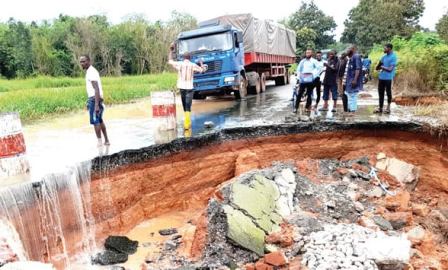
Across Nigeria, the phrase “federal road” has become a synonym for frustration. potholes, traffic, and abandoned construction sites. From the Benin–Ore expressway, Ekiti-Kogi highways to the Enugu–Port Harcourt highway, these vital arteries have turned into hazards. The truth is simple: the federal government cannot maintain them all. It’s time to hand most federal roads over to the states.
Nigeria’s federal highway network spans over 35,000 kilometres, cutting across every state and the FCT. No central authority can efficiently manage such an enormous stretch of road. The Federal Ministry of Works is overwhelmed by bureaucracy and underfunded. Projects drag on for years while commuters suffer daily.
Meanwhile, some state governments claimed to spend billions fixing portions of “federal” roads that run through their territories — often without reimbursement. This duplication of effort makes no sense. If states are already doing the work, they should have the authority to own and manage those roads fully.
Decentralising road management is not just common sense; it’s good governance. State governments are closer to the people and better understand local needs. With full control, they can introduce flexible solutions — tolls, maintenance partnerships, or private investment — without waiting for Abuja’s approval.
Lagos, Ogun, and Rivers have shown that when states take charge of infrastructure, progress follows. The Lekki–Epe Expressway and the network of new Ogun roads are examples of what’s possible when local leadership meets responsibility.
Right now, no one knows who to blame when a federal road fails — the contractor, the ministry, or a distant bureaucrat in Abuja? If roads were transferred to the states, responsibility would be clear. Citizens could hold their governors directly accountable. Democracy works best when power — and blame — are local.
Bad roads don’t just cause inconvenience; they kill businesses. Aside soaring costs of vehicle maintenance by the motorists, farmers lose produce on the way to markets, transport costs soar, and prices of goods rise. Well-maintained roads would boost trade, attract investors, and create jobs. Devolving road management is, therefore, not just political reform — it’s economic strategy.
The federal government should not abandon the road sector entirely. Instead, it should focus on truly national highways — the major inter-state and border routes that bind Nigeria together. Managing fewer roads means doing the job better,with higher quality and accountability.
For decades, Nigeria has preached federalism but practised centralisation. The broken state of our roads is a symptom of that imbalance. If the federal government truly wants progress, it must let go off what it cannot manage.
A road that belongs to everyone ends up being maintained by no one. Let the states take the wheel — and let Nigerians finally move forward.