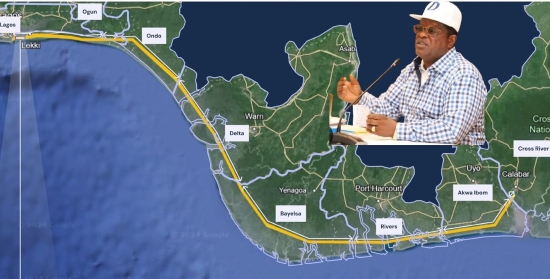
A fresh storm is brewing around Nigeria’s ambitious Lagos-Calabar Coastal Highway, as civic watchdog Tracka accuses the Federal Government of stonewalling critical transparency requests on the high-profile project.
More than a month after filing a Freedom of Information (FOI) request, the BudgIT-backed group says it has been met with what it describes as “deafening silence” from the Federal Ministry of Works, raising red flags over accountability in one of President Bola Ahmed Tinubu’s flagship infrastructure drives.
In its February 19, 2026 letter to Works Minister David Umahi, Tracka demanded sweeping disclosures: from procurement methods and contractor identities to cost breakdowns, funding sources, and environmental impact assessments. The ministry acknowledged receipt on March 2; but, according to the group, has yet to provide any answers as of mid-April.
“The Lagos-Calabar Coastal Highway is not just about building a road. It is raising deep accountability and governance concerns that cannot be ignored,” the organisation declared, pointing to what it calls glaring gaps in public disclosure.
At the heart of the controversy is uncertainty over the project’s true cost and financing structure, issues that have long dogged large-scale public works in Nigeria. The group also flagged reports of demolitions along parts of the corridor, with businesses uprooted and livelihoods disrupted amid lingering questions over compensation.
Environmental concerns are adding fuel to the fire. Tracka warned of potential long-term damage to coastal ecosystems, wetlands, and climate resilience, cautioning that the project’s impact could extend far beyond its economic promises.
Even the phased commissioning of completed sections has come under scrutiny, with the group suggesting it may be driven more by political optics than holistic project delivery.
“The continued silence weakens public trust,” Tracka said, vowing to intensify its #FollowTheProjects campaign and insisting that “public funds must work for the good of the people.”
For its part, the Ministry of Works has defended the project, citing its execution under an Engineering, Procurement, Construction plus Finance (EPC+F) model, a structure it says is necessary given the technical complexity of building across Nigeria’s fragile coastal terrain. It has also maintained that anti-corruption agencies are free to examine the project’s finances.
Construction is already advancing on the Lagos stretch, with partial openings reported and additional funding secured. But as bulldozers move forward, so too does a growing public debate, one that pits infrastructure ambition against mounting demands for transparency, environmental responsibility, and fiscal accountability.
Under Nigeria’s FOI Act, public institutions are required to respond to information requests within a specified timeframe. Yet, as this latest episode shows, compliance remains uneven, leaving citizens and watchdogs alike asking a simple but urgent question: what exactly is being hidden behind Nigeria’s most ambitious coastal road project?
©Copyright MOTORING WORLD INTERNATIONAL. All rights reserved. Materials, photographs, illustrations and other digital content on this website, may not be reproduced, published, broadcast, rewritten or redistributed in whole or in part without prior written permission from Motoring World International
Contact: editor.motoringworldng@motoringworldng.com