FEMI OWOEYE
Nigeria is taking a major step towards rewriting the rules governing its automotive industry, with the National Automotive Design and Development Council (NADDC) putting a proposed new law before industry stakeholders for scrutiny.
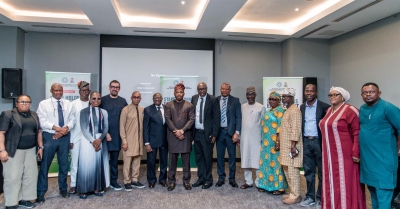
At a high-level stakeholders’ engagement in Lagos on September 3, 2026, the Council unveiled the Draft National Automotive Industry Bill, 2026, a proposed legislation designed to replace the 2014 NADDC Act and fundamentally reshape the legal and regulatory framework of Nigeria’s automotive sector.
NADDC Director-General, Otunba Oluwemimo Joseph Osanipin, said the proposed law was critical to transforming Nigeria from a predominantly vehicle-assembly market into a self-sustaining automotive manufacturing powerhouse.
According to him, the industry can no longer depend largely on vehicle assembly and imports while leaving critical components and other elements of the value chain to foreign suppliers.
He said the new framework would place greater emphasis on local content, component manufacturing, vehicle electrification, domestic supply chains and regional market integration.
Osanipin noted that the global automotive industry is undergoing rapid transformation, driven by electrification, cleaner mobility and technological advancement, while the implementation of the African Continental Free Trade Area (AfCFTA) is opening new opportunities for regional automotive trade.
He argued that Nigeria’s laws must therefore evolve to keep pace with these changes.
“While the National Automotive Design and Development Council Act of 2014 provided an important foundation, policy inconsistencies, legislative gaps and changing industry dynamics have created the need for a stronger and more predictable legal architecture,” he said.
The proposed Bill seeks to establish the National Automotive Design and Development Commission, replacing the existing Council and giving the new institution stronger statutory regulatory and enforcement powers.
It is also expected to provide legal backing for incentives, protections and implementation structures under the Nigeria Automotive Industry Development Plan (NAIDP).
NADDC said the new framework would provide greater certainty for Original Equipment Manufacturers (OEMs), component manufacturers, assemblers, suppliers and financiers, while encouraging investment and creating more employment opportunities, particularly for Nigerian youths.
Director of Policy, Planning and Statistics, Mr. Umar Nura Sidi, described the consultation as a critical stage in the development of the Bill.
 He said NADDC deliberately circulated the draft to industry players so that those who actually manufacture, assemble, invest and operate in the sector could help shape the legislation.
Sidi disclosed that major stakeholders, including the Nigerian Automotive Manufacturers Association (NAMA) and the African Association of Automotive Manufacturers (AAAM), had already submitted written contributions.
He stressed that the effectiveness of the proposed law would ultimately depend on the extent to which it reflects the realities of the industry.
The legal overview of the Bill was presented by Senior Advocate of Nigeria, Gboyega Oyewole.
The consultation attracted major industry players, including: Chairman, Auto and Allied Sub-sectoral Group, Lagos Chamber of Commerce and Industry (LCCI) and Group Deputy Managing Director of CFAO Mobility. Kunle Jaiyesimi; NAMA Chairman, Bawo Omagbitse; NAMA Executive Director and Chief Executive Officer, Dr. Harpreet Singh, MOMAN Chairman, Rev. Lambert Ekewuba; chief executives of vehicle assembly plants, automotive industry captains and other sector operators.
NADDC said the stakeholders’ recommendations would be incorporated into the final draft before its submission to the National Assembly.
The Council maintained that meaningful private-sector participation was essential to producing legislation capable of turning Nigeria into a leading automotive manufacturing hub in West Africa.
©Copyright MOTORING WORLD INTERNATIONAL. All rights reserved. Materials, photographs, illustrations and other digital content on this website, may not be reproduced, published, broadcast, rewritten or redistributed in whole or in part without prior written permission from Motoring World International
Contact: editor@motoringworldng.com