By Eugene Herbert
The release of dashcam footage from the horrific Vanderbijlpark crash in South Africa, which claimed the lives of 14 schoolchildren, reignited an uncomfortable but necessary conversation about road safety. For Nigerians, the tragedy feels painfully familiar.
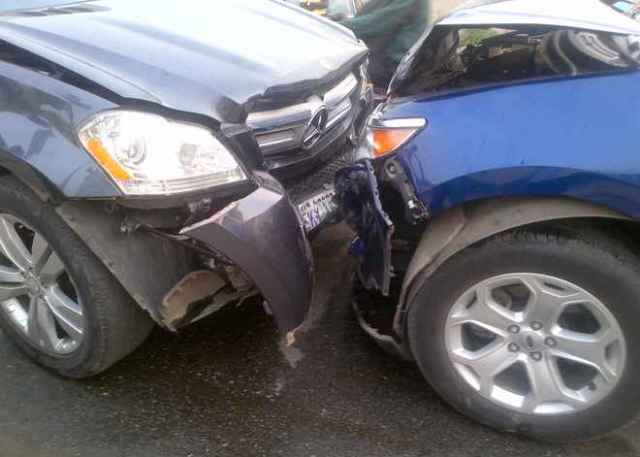
From fatal crashes on the Benin–Ore Road to near misses on the Lagos–Ibadan Expressway, such as the recent incident involving boxing champion Anthony Joshua, head-on collisions remain one of the deadliest threats on our highways.
Nigeria drives on the right-hand side of the road, and this simple fact must shape how drivers react when a head-on collision becomes imminent. On single-carriage highways riddled with aggressive overtaking, broken-down trucks, poor markings and minimal enforcement, every driver must assume that danger can appear at any moment.
A defensive driver is not an optimistic driver. They are prepared for the worst.
Accept the reality of Nigerian roads
Head-on collisions are rarely “accidents.” They are usually the result of poor overtaking decisions, impatience, fatigue or poorly trained drivers, especially among commercial vehicles. While nothing can guarantee absolute safety, how a driver reacts in the final seconds can mean the difference between survival and catastrophe.
The greatest danger is instinct. In emergencies, instinct often pushes drivers toward actions that increase risk. Survival depends on trained reactions.
Instinct versus trained reaction
1. An oncoming vehicle overtakes into your lane
This is the most common head-on collision scenario on Nigerian highways.
- Instinct: Drivers often swerve right in panic or mirror the overtaking vehicle’s movement. This is deadly, as both vehicles end up fighting for the same space.
- Trained reaction:
As the non-overtaking driver travelling on the right-hand side, never move into the left lane. The safest response in most cases is to move further right—towards the shoulder or verge. This creates space for the overtaking driver to return to their lane and avoids a direct, high-impact collision.
2. Fixating on the oncoming vehicle
- Instinct: You stare at the oncoming vehicle and subconsciously steer toward it.
- Trained reaction: Once the danger is identified, look away from the oncoming vehicle and focus on your escape path—usually the right shoulder. Your vehicle will naturally follow your line of sight.
3. Needing to reduce speed quickly
- Instinct: Slamming on the brakes, locking wheels (on vehicles without ABS) or losing steering control, especially dangerous on Nigerian roads with loose gravel and uneven surfaces.
- Trained reaction:
Ease off the accelerator and apply the brakes progressively. Reducing speed smoothly gives you control and time to manoeuvre. Often, the overtaking driver will realise the danger and attempt to return to their lane once space opens up.
4. Obstacles on the right shoulder
Nigerian roads are lined with open drains, culverts, trees, broken signage and abandoned vehicles.
- Instinct: Freeze, over-brake, or make violent last-second corrections.
- Trained reaction: Even with obstacles present, it is still safer to steer toward the right shoulder rather than endure a full head-on impact. If contact is unavoidable, aim for a glancing side impact, not a full frontal crash. Side impacts absorb less energy and greatly improve survival chances.
Training saves lives
The tragic loss of schoolchildren in recent head-on collisions highlights a critical failure in driver training, particularly in the scholar and commercial transport sector. These deaths are not inevitable; they are preventable.
MasterDrive extends its deepest condolences to the families affected by these tragedies and fully supports calls for stricter training and certification of school transport drivers. Proper training is the first and most important step toward reducing needless deaths on Nigerian roads.
Because on Nigerian roads, survival is not about luck—it is about preparation.
Eugene Herbert is the CEO of MasterDrive, South Africa.
©Copyright MOTORING WORLD INTERNATIONAL
All rights reserved. Materials, photographs, illustrations and other digital content on this website, may not be reproduced, published, broadcast, rewritten or redistributed in whole or in part without prior written permission from Motoring World International
Contact: editor.motoringworldng@gmail.com