ROTIMI ASHER
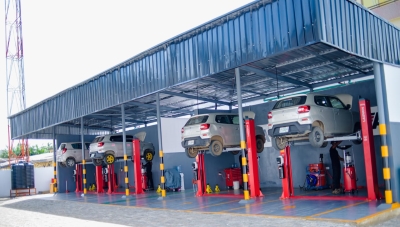
The Director-General of the National Automotive Design and Development Council, Otunba Oluwemimo Joseph Osanipin, has thrown a powerful spotlight on what he described as the “hidden goldmine” capable of transforming Nigeria into a true automotive powerhouse, aftersales services.
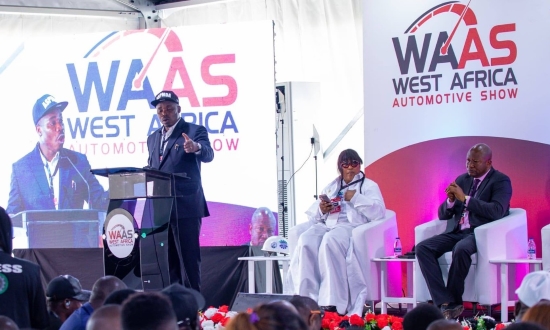
Speaking at the opening of the West African Automotive Summit 2026, Osanipin declared that Nigeria’s automotive future will not be driven by flashy vehicle launches or assembly plants alone, but by the strength of its spare parts, maintenance, technical servicing and customer support ecosystem.
In a hard-hitting keynote address that resonated strongly across the summit hall, the NADDC boss described aftersales as the “most potent yet underutilized growth engine” in the entire automotive value chain, warning that any industry built only around vehicle sales without strong maintenance support is standing on a weak foundation.
Addressing policymakers, investors, automakers and regional industry leaders, Osanipin said the real money, jobs and industrial opportunities in the automotive business are generated long after vehicles leave the showroom.
According to him, recent data from the National Bureau of Statistics (NBS), as reported by Punch Newspaper, revealed a sharp rise in vehicle and transport equipment imports into Nigeria, a development he said exposes the massive untapped economic potential within the aftersales market.
He noted that in emerging economies like Nigeria, only a small percentage of a vehicle’s lifetime value comes from the initial purchase, while the bulk of the economic activity lies in spare parts, tyres, lubricants, diagnostics, repairs, technical labour and maintenance services.
Osanipin stressed that Nigeria cannot build a globally competitive automotive industry without developing a strong aftersales ecosystem capable of sustaining vehicles throughout their lifespan.
He further argued that consumer confidence in locally assembled vehicles depends heavily on access to genuine spare parts, reliable maintenance networks and efficient service delivery systems.
According to him, brands that fail to guarantee dependable aftersales support risk losing long-term consumer trust, regardless of how attractive their vehicles may appear at launch.
The NADDC DG also identified aftersales as Nigeria’s easiest and least risky pathway into deeper local manufacturing, explaining that demand for fast-moving replacement parts and consumables continues to rise rapidly across the country.
He stated that local production of automotive components could unlock thousands of highly skilled technical jobs, reduce dependence on imports, conserve foreign exchange and strengthen Nigeria’s industrial capacity.
Beyond economics, Osanipin emphasized the direct connection between quality aftersales services and road safety, noting that poorly maintained vehicles remain a major threat on Nigerian roads.
He said a properly structured aftersales ecosystem would not only improve vehicle reliability and public confidence, but also create opportunities for technicians, engineers, artisans and small-scale manufacturers across the country.
In what many industry observers described as one of the strongest policy statements at the summit, Osanipin challenged investors and stakeholders to stop treating aftersales as a mere support function and begin positioning it as a central pillar of industrial growth, profitability and long-term sustainability.
Chairman of WAAS, Mr. Lukman Mahmud, echoed the same position, insisting that no automotive industry can survive without dependable support systems behind every vehicle sold.
He noted that the real strength of any automotive market is measured not at the showroom, but through reliability, maintenance culture, technical expertise and customer confidence long after purchase.
The West African Automotive Summit 2026 continues to serve as a major platform for automotive policy discussions, regional collaboration, innovation and investment partnerships aimed at accelerating industrial growth across West Africa.
©Copyright MOTORING WORLD INTERNATIONAL. All rights reserved. Materials, photographs, illustrations and other digital content on this website, may not be reproduced, published, broadcast, rewritten or redistributed in whole or in part without prior written permission from Motoring World International
Contact: editor.motoringworldng@motoringworldng.com