OPEYEMI OLOTU
Nigeria’s drive toward industrial transformation and automotive self-reliance received a major boost as the National Automotive Design and Development Council (NADDC) and the National Commission for Colleges of Education (NCCE) moved to forge a powerful alliance aimed at revolutionising technical education and preparing a new generation of automotive professionals.
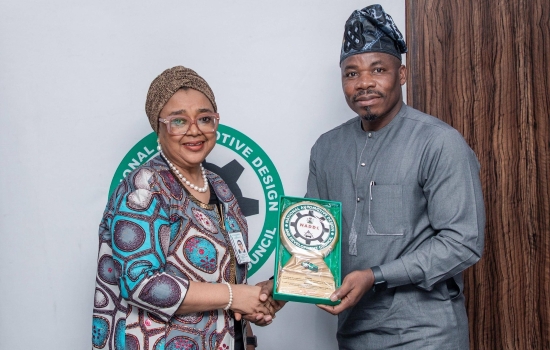
The groundbreaking move emerged during a high-level courtesy visit by the Executive Secretary of NCCE, Dr. Mrs. Angela Ajala, to the Director-General of NADDC, Otunba Oluwemimo Joseph Osanipin, at the Council’s headquarters in Abuja on May 21, 2026.
In what observers describe as a bold response to Nigeria’s growing skills gap and looming teacher shortage crisis, the two agencies opened discussions on integrating cutting-edge automotive technology training into Colleges of Education nationwide.
Dr. Ajala sounded a strong warning over the future of Nigeria’s education sector, revealing that the country could face a severe shortage of teachers within the next six years if urgent reforms are not implemented to restore the attractiveness and relevance of the teaching profession.
According to her, teacher education must urgently evolve beyond conventional classroom learning into a modern, innovation-driven system capable of equipping young Nigerians with practical, entrepreneurial and technology-based skills.
She identified automotive technology as one of the most strategic sectors for future economic growth, stressing that the industry presents enormous opportunities for employment, innovation and entrepreneurship in an increasingly technology-driven world.
To achieve this vision, the NCCE proposed a strategic partnership with NADDC to review and modernise technical and vocational education curricula by introducing automotive technology as a specialised skill area in Colleges of Education across the country.
Ajala further appealed for NADDC’s support in establishing automotive laboratories, workshops, mini-innovation hubs, fabrication centres and auto-diagnostic facilities within Colleges of Education to prepare students for the realities of the rapidly evolving automotive industry.
With the global transition toward electric vehicles (EVs), Compressed Natural Gas (CNG)-powered vehicles, hybrid systems and advanced automotive technologies gaining momentum, she said Nigeria cannot afford to leave its future workforce unprepared.
“These centres will not only serve as practical training facilities but also become innovation and entrepreneurship hubs capable of driving technological creativity and job creation among students,” she stated.
The NCCE boss also underscored the urgent need for intensive capacity-building programmes for lecturers and instructors to ensure that emerging automotive technologies and digital competencies are effectively embedded within pilot Colleges of Education where demand for such skills is expected to soar.
In a move designed to produce highly employable graduates, Ajala advocated the introduction of National Automotive Skills Competitions, internship schemes, industrial attachment programmes, innovation challenges and apprenticeship partnerships with automotive companies.
According to her, such initiatives would empower students far beyond traditional teaching qualifications by opening pathways to entrepreneurship, self-employment and industrial careers.
Responding enthusiastically, NADDC Director-General, Otunba Oluwemimo Joseph Osanipin, described education as the bedrock of national progress and reaffirmed the Council’s commitment to strengthening technical capacity development within Nigeria’s automotive ecosystem.
Osanipin noted that the proposed collaboration aligns perfectly with NADDC’s longstanding strategy of partnering with universities, polytechnics, technical colleges and other higher institutions to deepen automotive skills acquisition and industrial competence across the country.
He assured the Commission of NADDC’s readiness to work closely with the NCCE in building a sustainable framework capable of producing a new generation of technically skilled and innovation-driven Nigerians.
To accelerate implementation, both agencies immediately constituted a collaborative engagement committee tasked with fast-tracking key objectives of the partnership.
Among the expected outcomes of the alliance are better-trained technical teachers, stronger automotive skills development centres, enhanced youth employability, increased innovation and entrepreneurship, improved local automotive capacity and accelerated national industrialisation.
Industry stakeholders believe the partnership could mark a turning point in Nigeria’s quest to build a globally competitive automotive workforce while simultaneously tackling youth unemployment and strengthening the nation’s industrial future.
©Copyright MOTORING WORLD INTERNATIONAL. All rights reserved. Materials, photographs, illustrations and other digital content on this website, may not be reproduced, published, broadcast, rewritten or redistributed in whole or in part without prior written permission from Motoring World International
Contact: editor.motoringworldng@motoringworldng.com