FEMI OWOEYE
Nigeria’s automotive manufacturing industry is showing fresh signs of expansion, with the National Automotive Design and Development Council (NADDC) Governing Board uncovering significant production capacity, growing local content and ambitious plans for deeper vehicle manufacturing during a high-powered tour of assembly plants in Lagos.
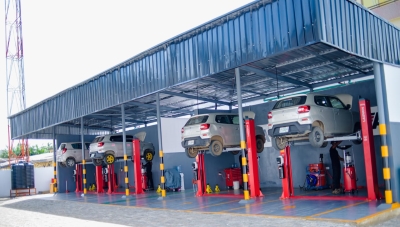
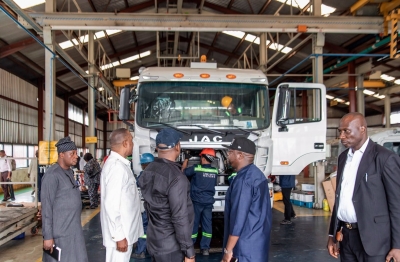
Led by its Chairman, His Eminence Chief Emma Eneukwu, the Board on Tuesday, September 15, 2026, visited Lanre Shittu Motors, CIG Motors and Mikano Motors to assess their production capabilities, operational challenges and prospects for expanding Nigeria’s vehicle manufacturing industry.
The tour offered a revealing insight into the industry’s capacity to produce more vehicles locally ,and the government support needed to turn that potential into a manufacturing revolution.
At Lanre Shittu Motors, Managing Director Taiwo Shittu disclosed that the company employs over 326 Nigerians and only one expatriate expert, while sourcing steel, lubricants, rubber and vehicle seats locally.
He revealed that the plant can assemble six trucks and six buses daily.
Even more striking is the company’s planned 40,000-square-metre facility in Ogun State, which will feature four production lines, each projected to produce about 6,000 vehicles.
The planned expansion could significantly increase the company’s contribution to Nigeria’s automotive production capacity.
At CIG Motors, Special Adviser to the Chairman, Brigadier General Chukwu Emeka (Rtd.), identified technology transfer and engineering indigenisation as critical to building a sustainable automotive industry.
He disclosed that, in partnership with the Federal Ministry of Humanitarian Affairs and Poverty Eradication, the company had trained approximately 25,000 young Nigerians in automobile maintenance over the past two to three years.
According to him, Nigeria must develop indigenous technical expertise to reduce dependence on foreign engineering knowledge and strengthen backward integration.
Mikano Motors also revealed ambitious plans to deepen its manufacturing operations.
Operational Manager Siyam Abdulkadir stated that the company has an annual production capacity of between 15,000 and 20,000 vehicles.
Currently operating a Semi-Knocked Down (SKD) assembly system, Mikano is working towards Completely Knocked Down (CKD) production — a major step towards deeper local vehicle manufacturing.
Abdulkadir noted that increased patronage of locally assembled vehicles would encourage further investment, adding that NADDC support was helping the company advance towards its CKD ambitions.
Speaking on the significance of the tour, Chief Emma Eneukwu expressed optimism about the capabilities of Nigerian automotive manufacturers.
He stressed that sustained government support and appropriate policies were essential to unlocking the industry’s full potential.
The Chairman said the Board would continue to serve as a bridge between government and the private sector by communicating manufacturers’ concerns and supporting efforts to create a more conducive environment for automotive and transportation sector growth.
In his brief, NADDC Director-General, Otunba Oluwemimo Joseph Osanipin, said the tour was designed to give the Governing Board firsthand knowledge of local assemblers’ capabilities and challenges.
He explained that the findings would strengthen the Council’s advocacy for policies that promote local production over vehicle importation.
Osanipin highlighted the Federal Government’s Nigeria First Policy and implementation guidelines developed following engagements with the Bureau of Public Procurement (BPP).
He also cited the recent circular issued by the Secretary to the Government of the Federation directing Ministries, Departments and Agencies (MDAs) to procure Nigerian-made vehicles.
According to him, the initiative is expected to expand the market for local assemblers, stimulate investment and strengthen Nigeria’s automotive manufacturing industry.
With major assemblers revealing substantial capacity and expansion ambitions, the NADDC Governing Board’s plant tour has brought renewed attention to the question of whether Nigeria can transform its vehicle assembly operations into a stronger, more self-reliant automotive manufacturing industry.
©Copyright MOTORING WORLD INTERNATIONAL. All rights reserved. Materials, photographs, illustrations and other digital content on this website, may not be reproduced, published, broadcast, rewritten or redistributed in whole or in part without prior written permission from Motoring World International
Contact: editor@motoringworldng.com