EUGENE HERBERT
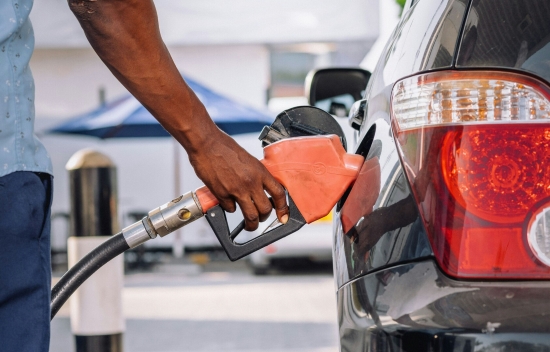
Fuel prices in Nigeria continue to climb, driven partly by persistent global tensions around the Strait of Hormuz, a critical artery for global crude oil supply. For motorists and fleet operators alike, the impact is immediate and painful: higher transport costs, shrinking margins, and increased pressure on household income.
But while drivers cannot control global oil prices, they can control how efficiently they use fuel. In today’s environment, fuel efficiency is no longer a nice-to-have. It is an essential survival strategy.
From Reaction to Strategy
For years, many motorists have responded to fuel price hikes with short-term adjustments: driving less, cutting back on trips, or simply absorbing the cost. That approach is no longer sustainable.
What is required now is a deliberate, long-term shift in mindset. Fuel efficiency must become a habit-something built into daily driving decisions, vehicle maintenance routines, and, for businesses, operational planning.
Rather than thinking in percentages, it helps to think in naira. A modest 15% reduction in fuel consumption for a vehicle covering about 3,000km monthly can translate into savings of hundreds of thousands of naira annually. Multiply that across a fleet, and the financial impact becomes impossible to ignore.
Your Driving Style Matters More Than You Think
How you drive has a direct effect on how much fuel you consume. Aggressive acceleration, excessive idling, and inconsistent speeds all increase fuel usage.
Smooth acceleration, maintaining steady speeds, and anticipating traffic flow can significantly reduce consumption. In heavily congested cities like Lagos and Abuja, this becomes even more critical, as stop-and-go traffic is one of the biggest fuel drains.
Short trips, especially those under 5km, are particularly inefficient because engines consume more fuel before reaching optimal operating temperature. Combining errands into a single trip can make a noticeable difference.
Maintenance Is Money
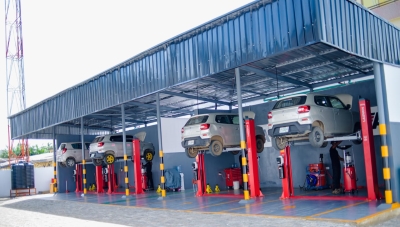
Even the most careful driver will struggle with high fuel consumption if the vehicle itself is not in good condition.
Simple issues, such as under-inflated tyres, clogged air filters, worn spark plugs, or using the wrong engine oil, can significantly increase fuel consumption. Low tyre pressure alone can quietly drain your wallet by forcing the engine to work harder.
In today’s context, routine servicing is no longer just about preventing breakdowns; it is a direct fuel-saving measure. A well-maintained vehicle is an efficient vehicle.
Plan Smarter, Not Harder
A large portion of unnecessary fuel consumption happens before a journey even begins.
Multiple isolated trips, poor route planning, and driving during peak congestion all increase fuel usage. With traffic congestion now a daily reality in major Nigerian cities, planning becomes essential.
Motorists can reduce fuel costs by consolidating trips, carpooling where possible, and using navigation apps to avoid traffic bottlenecks. These small adjustments, repeated consistently, can yield substantial long-term savings.
Data Over Assumption for Fleet Operators
For fleet managers, guesswork is expensive. The most effective way to reduce fuel consumption is through data.
Telematics systems, now increasingly accessible, allow operators to track driver behaviour, monitor fuel usage, and identify inefficiencies such as idling or poor route choices. With this information, targeted improvements can reduce fuel consumption by up to 15%.
In a high-cost fuel environment, that level of efficiency can make the difference between profit and loss.
Training for Efficiency and Safety
Eco-driving is not just common sense. It is a skill that can be taught and refined.
Formal driver training programmes can reduce fuel consumption by 15% to 20% on average. More importantly, they help turn efficient driving into instinct rather than effort. An added benefit is improved road safety, which reduces accident-related costs and downtime.
A Culture of Efficiency
Fuel price uncertainty is likely to remain a constant feature of Nigeria’s economic landscape. Waiting for prices to stabilise is not a strategy.
The more effective approach is to build a culture of efficiency, one that influences every journey, every service interval, and every operational decision.
In the end, while motorists cannot dictate the price displayed at filling stations, they can control how much fuel they consume to get from one point to another. And in today’s Nigeria, that control is more valuable than ever.
Eugene Herbert is the CEO of MasterDrive based in South Africa
©Copyright MOTORING WORLD INTERNATIONAL. All rights reserved. Materials, photographs, illustrations and other digital content on this website, may not be reproduced, published, broadcast, rewritten or redistributed in whole or in part without prior written permission from Motoring World International
Contact: editor.motoringworldng@motoringworldng.com