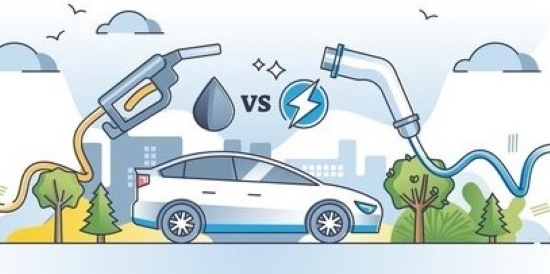
Nigeria’s fuel reality has entered a new era. And motorists are feeling the heat like never before. With global oil tensions squeezing supply chains and domestic deregulation pushing pump prices upward, the days of predictable fuel costs are gone.
From Lagos to Abuja, the real crisis is no longer just buying a car. It’s keeping it moving without draining your wallet.
Because in today’s Nigeria, the true cost of ownership isn’t the sticker price, but what you burn every kilometre.
Forget range anxiety or engine size. The question that matters now is brutally simple: How much does it cost you to drive 100km on Nigerian roads?
Put three popular SUV options side by side—the Toyota RAV4 2.0 GX-R AWD, Hyundai Tucson 2.0D Executive, and the rising electrified contender, SAGLEV Aeolus Sky 01 Pro. And the numbers begin to expose a shifting reality.
Using typical Nigerian fuel price ranges (petrol hovering around ₦1200 –₦1,400/litre and diesel often higher), the cost dynamics mirror a global trend:
- Petrol SUV: High and rising running cost
- Diesel SUV: No longer the “cheaper” alternative
- PHEV: Significantly lower fuel spend—if used correctly
What used to be a petrol vs diesel debate is quickly becoming irrelevant. Both are now under pressure. And neither offers real protection from price shocks.
In cities like Lagos, where gridlock can double fuel consumption, conventional engines suffer the most. Idling, crawling, and constant acceleration quietly inflate your fuel bill far beyond official figures.
This is where plug-in hybrids like the SAGLEV Aeolus Sky 01 Pro or Hyundai Kona gain a decisive edge:
- Electric mode handles low-speed traffic efficiently
- Fuel consumption drops dramatically in urban use
- Less dependence on constant refuelling
In real-world Nigerian driving, not laboratory tests, that advantage becomes even more pronounced.
The Hidden Advantage: Flexibility in an Unstable Market
Full electric vehicles still face a major hurdle in Nigeria, when it comes to charging infrastructure. But PHEVs offer a workaround. They run on fuel when needed and switch to electric for daily commutes. No total reliance on public charging stations
In a country where power supply can be inconsistent, that flexibility is not just convenient, it’s strategic.
But There’s a Catch. PHEVs are not magic.
To truly save money, you must charge regularly. Electricity costs (and generator use) must be considered. Poor charging habits can erase the advantage
In Nigeria, where many households rely on alternative power, this becomes a critical factor. A PHEV only beats petrol and diesel if it’s used intelligently.
The Bottom Line
Nigeria’s fuel landscape is forcing a mindset shift.
As petrol is now expensive, just as diesel has lost its cost advantage, efficiency is now king. And quietly, plug-in hybrids are stepping into the spotlight, not as futuristic luxuries, but as practical tools for beating fuel inflation.
In this new era, the smartest car isn’t the most powerful or the most popular. It’s the one that costs you the least to drive tomorrow.
©Copyright MOTORING WORLD INTERNATIONAL. All rights reserved. Materials, photographs, illustrations and other digital content on this website, may not be reproduced, published, broadcast, rewritten or redistributed in whole or in part without prior written permission from Motoring World International
Contact: editor.motoringworldng@motoringworldng.com