

FEMI OWOEYE
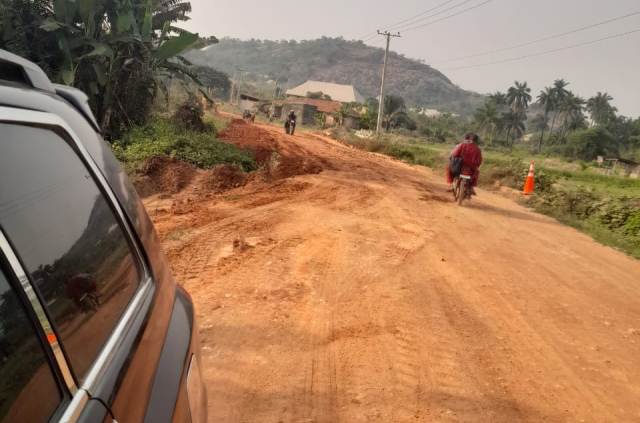
The Ado Local Government Secretariat Road currently under construction by the Ekiti State Government should be a routine infrastructure project.Instead, it is fast becoming another troubling example of how not to build roads in Nigeria.
A critical section of this road requires proper drainage into the Ureje River. For a long time, that section was abandoned. Now, rather than addressing the drainage challenge as basic engineering demands, soil is being indiscriminately piled over the road and adjoining waterways, apparently to be tarred over.
This approach is deeply flawed. Drainage is not an afterthought in road construction; it is foundational. Without a proper drainage system, the lifespan of the road is already compromised. Water will find its way back, weakening the base, washing away the soil, and eventually destroying the asphalt. What is being done now only creates the illusion of progress while setting the stage for premature failure, repeated repairs, and waste of public funds.
 Sadly, this is not an isolated case. Ekiti motorists are already living with the consequences of similar poor engineering decisions on the Igbemo–Ikole Ekiti Road. That road stands as a glaring monument to amateurish construction. It is riddled with dangerous bends, some so ill-conceived that they almost turns a motorist back toward the direction he comes from, only to swing forward again. Driving on it feels less like modern motoring and more like navigating a poorly drawn sketch.
When a Motoring World correspondent first drove on the Igbemo–Ikole Road, his spontaneous reaction was telling: “Was this road supervised by a palm wine tapper?” The comment, though harsh, captured the frustration of many road users. The road snakes unpredictably, offering little margin for error, especially at speed or in poor weather. For any objective observer, if an award were to be given for the most amateurishly constructed road in Nigeria, that road would be a strong contender.
The tragedy is that these defects are not acts of God; they are human decisions. Poor supervision, disregard for engineering standards, and the absence of accountability are the real culprits. More importantly, they are preventable. Even now, the dangerous geometry of the Igbemo–Ikole Road can still be corrected in the interest of safety, if there is the political will to do so.
Aside Ado local government secretariat and several communities, along Igirigiri Road under construction are The Nigerian Immigration Service (NIS) permanent office, a stadium under construction, a proposed State Housing Estate and a market. Governor Biodun Abayomi Oyebanji’s administration still has the opportunity to act differently.

The Ado Secretariat Road, popularly known as Igirigiri road, should not join the growing list of roads built to fail. Contractors must be called to order, designs must be respected, and drainage must be properly constructed. Infrastructure is too important to be reduced to shortcuts.
What is worth doing at all is worth doing well. Ekiti people deserve roads that are safe, durable, and professionally built—not projects that will haunt motorists and taxpayers for years to come.
©Copyright MOTORING WORLD INTERNATIONAL
All rights reserved. Materials, photographs, illustrations and other digital content on this website, may not be reproduced, published, broadcast, rewritten or redistributed in whole or in part without prior written permission from Motoring World International
Contact: editor.motoringworldng@gmail.com

